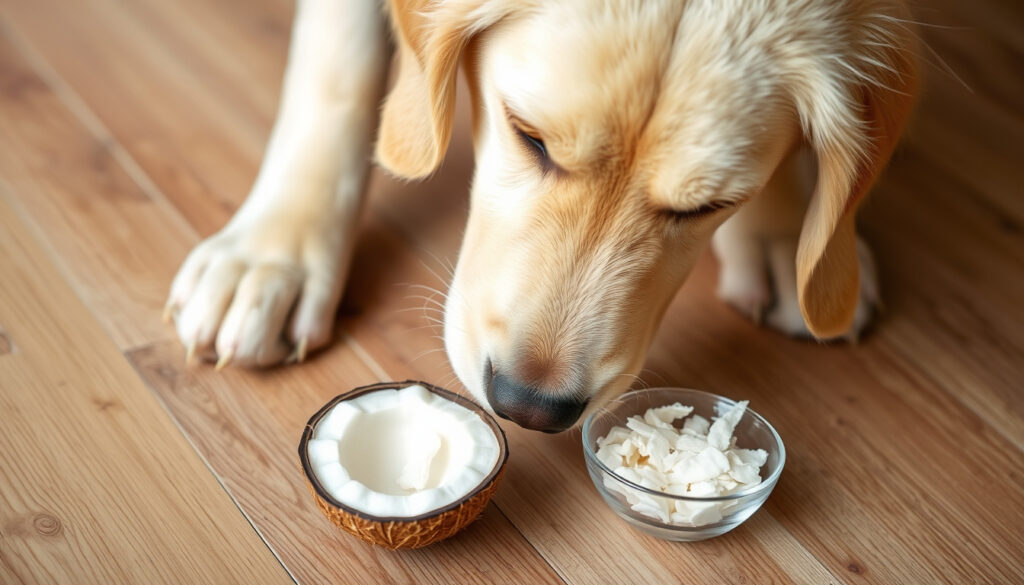
Can Dogs Eat Coconut? Vet-Approved Safety, Benefits & Risks
You’re halfway through a coconut curry when your dog gives you that look—the one that says “I want some.” Before you share, here’s the real story: plain coconut flesh is safe in tiny amounts, but the coconut form matters, and portion control is everything. This article breaks down exactly what’s safe, what’s not, and how much to give without risking your dog’s health.
Safe for dogs: Coconut meat, oil, milk, and water are safe in moderation · Calories per 100g coconut meat: 354 kcal · Recommended max serving (small dog): 1 tsp coconut meat per day · Risk level with too much: High fat, can cause pancreatitis · Toxic parts: Coconut husk and shell (choking hazard)
Quick snapshot
- Optimal therapeutic dosage of coconut oil for skin conditions is not established
- Whether coconut helps prevent parasites in dogs lacks robust evidence
- No major timeline events; safety guidance remains consistent across veterinary sources
- More research on MCT benefits for dogs; standardization of serving guidelines expected
Six key facts, one pattern: coconut’s fat content dominates every safety decision.
| Label | Value |
|---|---|
| Toxicity to dogs | Non-toxic (meat, oil, milk, water) |
| Calories (100g coconut meat) | 354 kcal |
| Fat content (100g coconut meat) | 33 g fat (29 g saturated) |
| Safe serving (small dog, <20 lbs) | 1 tsp meat or 1/4 tsp oil per day |
| Safe serving (medium dog, 20-50 lbs) | 1 tbsp meat or 1/2 tsp oil per day |
| Safe serving (large dog, >50 lbs) | 2 tbsp meat or 1 tsp oil per day |
Is Coconut Safe for Dogs to Eat?
Veterinary consensus is clear: plain coconut flesh, oil, milk, and water are not toxic to dogs. The Purina US veterinary team states directly that coconut flesh is non-toxic, but too much can cause weight gain and digestive upset. The risk isn’t toxicity—it’s the fat content.
What does the research say?
- Coconut meat is not toxic to dogs (Purina US)
- Coconut husk and shell pose choking and intestinal blockage risk (Purina US)
- Moderation is key due to high fat content
- Coconut products with added sugars, xylitol, or other additives are dangerous
Are there any toxic parts?
- The hard outer shell and fibrous husk are not digestible. Swallowing them can require surgical removal (Purina US).
Coconut’s fat density (33g per 100g, mostly saturated) means even a tablespoon packs a calorie punch for a small dog. Treat it as a rare indulgence, not a dietary staple.
The pattern: what’s safe for humans is often risky for dogs because of scale. A dog’s daily calorie requirement is far lower than ours, and coconut’s fat load adds up fast.
Can Dogs Eat Coconut Meat, Oil, Water, or Milk?
Each coconut form carries different risks and benefits. Here’s the breakdown:
Coconut meat
Safe in small, bite-sized pieces. Start with a teaspoon for small dogs, up to a tablespoon for large breeds (Purina US). High in fiber and MCTs, but also high in saturated fat.
Coconut oil
Can support skin and coat health when used sparingly. A common dosing heuristic is 1/4 teaspoon per 10 pounds of body weight per day (WOpet warns that an overdose can upset the stomach). Start low and monitor for loose stools.
Coconut water
Low in calories and a hydration option, but high potassium means too much can cause electrolyte imbalance. Stick to unsweetened, additive-free brands in small amounts.
Coconut milk
Few tablespoons are safe if unsweetened. Many canned products contain thickeners, sugar, or even xylitol. Vet Today advises treating coconut milk as a supplement rather than a staple, and notes it can cause vomiting or weight gain if overconsumed.
Commercial coconut products—cookies, macaroons, cream pie—often contain chocolate, xylitol, macadamia nuts, or excessive sugar. These are dangerous and should never be shared.
The implication: unsweetened, unprocessed coconut forms are safe in tiny doses. Anything with a label longer than one ingredient spells trouble.
What Are the Health Benefits of Coconut for Dogs?
Medium-chain triglycerides (MCTs) and energy
Coconut contains MCTs that can boost energy and brain function. Purina notes that coconut flesh offers some nutritional value, but it’s not a necessary part of a balanced diet (Purina US).
Skin and coat health
Coconut oil may improve skin hydration and reduce itchiness. However, WOpet reports that some dogs are allergic and may experience increased itching or digestive discomfort.
Antimicrobial properties
Some studies suggest lauric acid has antibacterial and antiviral properties, but evidence is limited. The Purina US team warns against expecting medical benefits from a treat.
Many owners hope coconut oil will cure skin allergies or parasites. The data isn’t strong enough to recommend it as a therapy—treat it as a possible adjunct, not a replacement for veterinary care.
The trade-off: any health upside is small and unproven, while the fat and calorie load is real and immediate.
How Much Coconut Can a Dog Eat Safely?
Portion sizes by dog weight
- Small dog (<20 lbs): 1 tsp coconut meat or 1/4 tsp oil daily
- Medium dog (20-50 lbs): 1 tbsp meat or 1/2 tsp oil
- Large dog (>50 lbs): 2 tbsp meat or 1 tsp oil (Purina US)
General rule: treats should not exceed 10% of daily caloric intake (Purina US).
Signs of overconsumption
Monitor for loose stools, vomiting, or bloating after the first introduction. Overfeeding can trigger pancreatitis, especially in breeds prone to it (Purina US). Vet Today advises that dogs with obesity, pancreatitis, or digestive issues avoid coconut milk entirely.
The pattern: start tiny, watch for stool changes, and never exceed the 10% treat rule.
What Happens if a Dog Eats Too Much Coconut?
Short-term digestive upset
Vomiting, diarrhea, and bloating are common after a large serving. The high fat content upsets the gastrointestinal system quickly (Purina US).
Long-term risks (pancreatitis)
Frequent overfeeding of fatty foods like coconut can lead to pancreatitis—a painful inflammation that may require hospitalization. Symptoms include lethargy, loss of appetite, and hunched back (Purina US). If a dog eats a whole coconut, the shell pieces can cause intestinal obstruction; call your vet immediately.
A single teaspoon of coconut oil contains about 40 calories and 4.5 grams of fat. For a 10-pound dog, that’s already 10% of daily calories—and all fat. Easy to overshoot.
The consequence: overindulgence turns a safe snack into a medical problem. Treat coconut as a high-risk food, not a harmless chew.
Confirmed facts
- Coconut meat, oil, water, and milk are safe for dogs in moderation (Purina US)
- Coconut husk and shell can cause intestinal blockage (Purina US)
- Commercial coconut treats with chocolate, xylitol, or macadamia nuts are toxic
- High fat in coconut can trigger pancreatitis (Purina US)
What’s unclear
- Optimal therapeutic dosage of coconut oil for skin conditions is not established
- Whether coconut helps prevent parasites in dogs lacks robust evidence
“Coconut flesh is not toxic to dogs, but too much can cause weight gain.”
— Purina US veterinary team (Purina US source)
“Fresh coconut pulp is safe; avoid processed coconut products.”
— Vet at Pooch & Mutt (based on consensus from veterinary advice)
“An overdose of coconut oil can upset a dog’s stomach.”
— WOpet (WOpet source)
For dog owners who want to share the occasional tidbit, the safest path is plain, unsweetened coconut meat in portions that fit the 10% treat rule. Skip the coconut cookies, the cream pie, the macaroons—those are human treats with dog-unfriendly ingredients. The choice is clear: offer a tiny amount or none at all, because the fat and calorie load makes coconut a luxury, not a daily food.
Owners who want a deeper dive into feeding coconut can check the coconut safety guide for dogs which covers portion sizes and risks.
Frequently asked questions
Can dogs eat coconut husk?
No. The husk and shell are indigestible and can cause choking or intestinal blockage. Always remove them before feeding (Purina US).
Is coconut oil good for dog skin allergies?
Some owners report improvement, but WOpet notes that coconut oil can itself cause itchiness in allergic dogs. Consult a vet before using it as a treatment.
Can dogs eat coconut yogurt?
Plain, unsweetened coconut yogurt is safe in tiny amounts, but many brands contain added sugar or xylitol. Check the label carefully.
How do I introduce coconut to my dog?
Start with a tiny piece of plain coconut meat (1/4 tsp for small dogs) and watch for stool changes over 24 hours. Increase slowly if tolerated.
Can dogs eat coconut chips?
Only if they are unsweetened, unsalted, and free of additives. Many commercial chips are seasoned or roasted in oils that upset dogs.
Can dogs eat coconut flour?
Coconut flour is safe in small quantities baked into treats, but high fiber can cause digestive upset if overused.
Can dogs eat coconut shrimp?
No. Coconut shrimp is deep-fried and usually breaded, with high fat and salt. Skip it.
If you’re considering adopting a dog, learn how to adopt a dog near me in Ireland for local rescue options. And for entertainment, check out Dog with a Blog for a fun canine perspective.
More related posts
 Sexiest Man Alive 2023: Patrick Dempsey Wins at 57
 What Is Natural Selection? Definition, Process & Examples
 Brooklyn Nine-Nine – Cast, Seasons, Ending and Where to Watch
 Labubu Doll for Sale – Best Places to Buy Authentic Ones
 What Are the 7 Continents? Names, Sizes, and Facts
 Who Is the Most Famous Person in the World? (2026)
 The Quick and the Dead (1995): Cast, Meaning & Worth Watching
 US-China Trade Talks – Current Status 2025 Implementation
