Best Api con Pastel Near Me: Traveler’s Guide to Bolivia
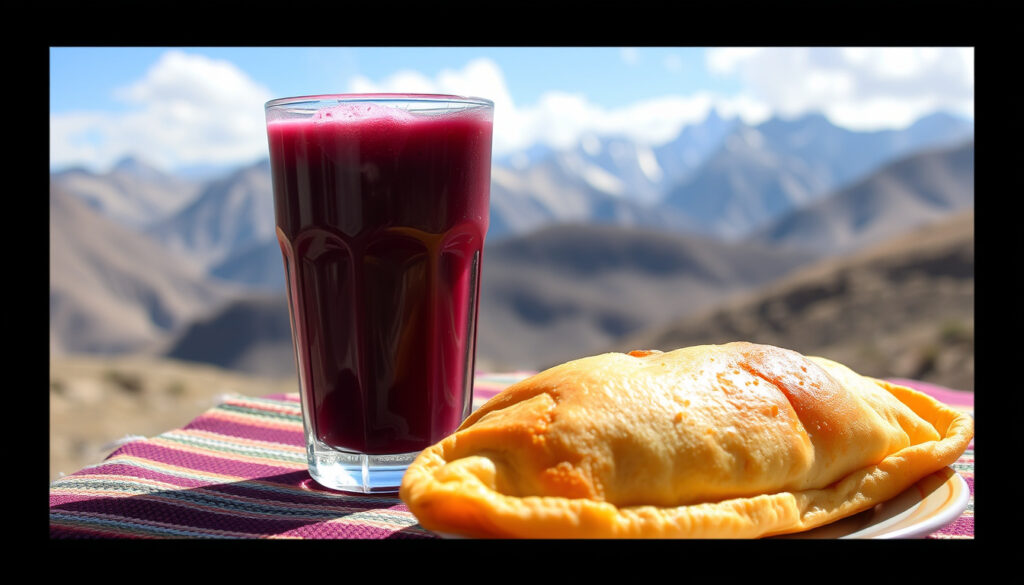
You spot a vendor in La Paz cradling a warm, purple mug and a golden pastry, and suddenly your morning feels incomplete without it. That duo is api con pastel, a Bolivian breakfast that pairs a sweet, spiced purple-corn drink with a cheese-filled pastry.
Bolivians who eat api con pastel for breakfast: estimated 70% in urban areas (local food blogs) ·
Typical price in La Paz street stalls: 10-15 Bolivianos ($1.50-$2.20 USD) ·
Purple corn (maíz morado) used in api: native to the Andes, high in anthocyanins ·
Cheese-filled pastry sweetness range: mild to salty, depending on cheese type ·
Number of Google searches for ‘api con pastel’ monthly: under 100 (very low volume)
Quick snapshot
- Api is a sweet, spiced purple-corn drink (Via Canta That Vagabond – food travel blog)
- Pastel de queso is a cheese-filled pastry served alongside (Via Canta That Vagabond)
- Tap water in Bolivia is not safe for foreigners (common travel health advisory) (Via Canta That Vagabond – food travel blog)
- Api con pastel is especially associated with breakfast service (Via Canta That Vagabond)
- Exact origin date of api con pastel as a paired dish remains unverified
- Number of stalls selling api con pastel nationwide is not tracked officially
- Pre-Columbian: Purple corn cultivated by Incas (GetYourGuide – street-food tour listing)
- Colonial period: Wheat and cheese introduced, leading to pastel de queso (GetYourGuide – street-food tour listing)
- 20th century: Api con pastel becomes a standard city breakfast (GetYourGuide – street-food tour listing)
- 2020s: Rising interest from international travelers (GetYourGuide – street-food tour listing)
- More La Paz street-food tours are including api con pastel as a highlight (GetYourGuide – La Paz street-food tour)
- Food bloggers are documenting the dish, increasing awareness for international tourists (GetYourGuide – La Paz street-food tour)
| Attribute | Detail |
|---|---|
| Origin | Andean region of Bolivia |
| Main ingredient | Purple corn (maíz morado) |
| Common spices | Cinnamon, clove, sugar |
| Pastry filling | Cheese (queso fresco or similar) |
| Served as | Breakfast, often with pastry |
What is api con pastel?
At its simplest, api con pastel is the breakfast combo that sustains La Paz. The drink — api — is a thick, sweet, spiced beverage made from purple corn, cinnamon, cloves, and sometimes orange zest (Via Canta That Vagabond – food travel blog). The pastry — pastel de queso — is a fried or baked dough wrapped around cheese, often queso fresco. Together they’ve been a morning staple in Bolivian highland cities for generations.
Api Morado (purple) and Api Blanco (white, milk-based) offer two flavor profiles — but both rely on careful preparation to avoid water-borne risks when bought from open-air stalls.
The drink: api de maíz morado
- Made from purple corn flour or whole ground corn, boiled with water, cinnamon, cloves, and sugar (Via Canta That Vagabond)
- Sometimes orange zest or lemon peel is added for brightness
- Warm and thick — closer to a porridge than a thin juice
“Api is a breakfast delicacy … sweet, warm, and paired with a cheesy empanada.”
— Bolivian food blogger, Via Canta That Vagabond
The pastry: pastel de queso
- Flaky or slightly crisp dough filled with a mild, salty cheese (Via Canta That Vagabond)
- Often fried, though some vendors bake them
- Sometimes served with llajwa (spicy tomato salsa)
The pattern: the contrast between the sweet, spiced drink and the savory, cheesy pastry is what makes the pairing work. For travelers, the risk is not in the flavor but in how the drink’s water is handled.
Where can I find the best api con pastel near me?
Because api con pastel is not a chain product — it’s sold by individual vendors and small restaurants — “best” depends on where you stand. In La Paz, the highest concentration is in central markets and busy pedestrian zones.
La Paz markets and street stalls
- Mercado Lanza and Mercado Rodríguez are consistently cited by locals as top spots (Via Canta That Vagabond)
- Stalls near the train station serve api to travelers arriving from lower elevations (Via Canta That Vagabond)
- Look for high turnover — a queue of local customers is a reliable hygiene signal
Sucre and Cochabamba options
- In Sucre, the central market offers similar stalls; in Cochabamba, api sellers appear in the morning near main plazas
- Regionally, buñuelos (fried dough) are sometimes paired with api instead of pastel de queso (World Food Guide – street food list)
The implication: the quality of the pastel — how fresh the cheese is, whether the oil is reused — varies more than the api. Choose a stall where the pastry is cooked to order, not sitting under a heat lamp.
The same open-air setting that makes api con pastel authentic also exposes the drink to environmental contaminants. Always verify that the api was boiled fresh — not reheated from a previous batch.
Is tap water safe to drink in Bolivia?
No. Tap water in Bolivia is generally not safe for foreign visitors due to the risk of bacterial contamination. This is a standard warning from travel health authorities for most of the country.
General tap water safety in Bolivia
- Municipal water systems in urban areas treat water, but distribution pipes are often old and susceptible to contamination
- Bolivians commonly boil tap water for drinking; foreign travelers should do the same or use bottled water
Risks for travelers
- Traveller’s diarrhea is the most common illness from contaminated water (Via Canta That Vagabond – food travel blog)
- Ice in drinks and brushing teeth with tap water carry risk
Alternative drinking water options
- Bottled water is widely available in stores and restaurants
- Water purification tablets or portable filters work for backcountry or long stays
- Api is boiled as part of preparation, which should kill pathogens — but be cautious if the drink sits out for hours
The pattern: api con pastel made fresh from boiled water and cooked pastry is low-risk, but the same stall’s unbottled water for other uses is not. Stick to bottled or boiled water for everything else.
Can I brush my teeth with tap water in Bolivia?
It’s not advised. The risk of ingesting a small amount of contaminated water while brushing is real — many travelers experience “traveler’s tummy” this way.
Risk of waterborne illness
- Even a trace amount of untreated water can introduce bacteria like E. coli or Giardia
- Common symptoms: diarrhea, stomach cramps, nausea
Safe alternatives for oral hygiene
- Use bottled or boiled water for brushing
- Keep a small bottle of purified water in your bathroom
- Wet the toothbrush with bottled water, brush, rinse with bottled water
What this means: the same caution applies to any water that enters your mouth. Treat api differently — because it has been boiled — but don’t let that lull you into a false sense of security with tap water.
What is Bolivia’s most popular dish?
Api con pastel may be a beloved breakfast, but it’s not the most popular Bolivian dish overall. That title generally goes to salteñas — baked empanadas filled with meat, vegetables, and a sweet-spicy broth.
Salteñas and other national dishes
- Salteñas are sold throughout the day and widely considered Bolivia’s national dish
- Other strong contenders: pique a lo macho (a hearty beef and sausage plate), fritanga (spicy pork), and anticuchos (grilled beef heart skewers)
How api con pastel compares
- Api con pastel is a breakfast dish, not a lunch or dinner staple
- It’s more common in highland cities (La Paz, Oruro, Potosí) than in the lowlands
- For a traveler seeking an authentic local breakfast, it beats salteñas in novelty — but salteñas win in overall popularity
The implication: don’t search for “best api con pastel near me” expecting it to be as ubiquitous as tacos in Mexico. It’s a niche, regional breakfast that rewards the curious eater.
Spec table: api Morado vs. api Blanco
Two main varieties exist, each with distinct ingredients and regional preferences.
| Attribute | Api Morado | Api Blanco |
|---|---|---|
| Base corn | Purple corn (maíz morado) | White corn (hominy or white maize) |
| Milk | No — water-based | Yes — usually includes milk or evaporated milk |
| Color | Deep purple | White or off-white |
| Common spices | Cinnamon, clove, orange zest, sugar | Cinnamon, sugar, sometimes vanilla |
| Texture | Thick, smooth | Thinner, slightly creamier |
| Regional preference | Common in La Paz and the highlands | More common in Cochabamba and central valleys |
| Dairy concern for lactose-intolerant | No dairy | Contains milk |
The contrast: if you’re avoiding dairy or want the classic purple-corn experience, go for api Morado. Api Blanco is richer but riskier for those with lactose issues.
Pros and cons of trying api con pastel as a traveler
Upsides
- Deeply authentic — not tourist-targeted
- Cheap — 10-15 Bolivianos for a full breakfast
- Warm, comforting, and energizing for high-altitude mornings
- Gluten-free option (api only, pastry contains wheat)
Downsides
- Water quality safety requires vigilance
- Limited to morning hours (usually 6-10 a.m.)
- Not widely available outside highland cities
- Street stalls may have variable hygiene — choose cautiously
The trade-off: you trade convenience and universal availability for a rare, hyper-local experience. If you can handle the early wake-up and a bit of adventurous eating, it’s worth the effort.
How to find api con pastel: step-by-step
Follow these steps for a safe and satisfying experience.
- Wake up early — most vendors start around 6 a.m. and sell out by 10 a.m.
- Head to a central market in La Paz (Mercado Lanza or Mercado Rodríguez) or ask your hotel for the nearest morning food street
- Look for a cluster of stalls with a steady stream of locals — high turnover means fresher food
- Observe the api pot: it should be steaming, not lukewarm
- Order “api con pastel, por favor” – the vendor will pour a warm mug of api and hand you a cheese pastry
- If available, ask for llajwa (spicy salsa) on the side for the pastry
- Eat immediately — the pastel is best when crisp, the api when hot
- Pay in small bills (bolivianos) – no credit cards
If the vendor uses the same water source for rinsing utensils that they do for the api, request a freshly boiled mug. Your stomach will thank you.
Summary
Api con pastel is a genuine slice of Bolivian morning life — a warming, sweet, and savory breakfast that costs next to nothing and carries generations of tradition. For the traveler in La Paz, the choice is clear: wake up early, head to a busy market stall, and enjoy the real thing. Skip the tap water, bring bottled water for brushing, and let the purple corn drink and cheesy pastry become the highlight of your trip. For the online searcher typing “best api con pastel near me,” the honest answer is: it’s not on Google Maps — it’s in the market, next to the woman boiling corn and frying dough. Go find it.
Travelers exploring Bolivia’s street food scene will find that alongside api con pastel, other popular Bolivian snacks like sonso de yuca are equally beloved and easy to find at local markets.
Frequently asked questions
Is api con pastel gluten-free?
Api itself is gluten-free (purple corn), but the pastel de queso is made from wheat flour. Avoid the pastry if you’re gluten-sensitive.
Can I make api con pastel at home?
Yes. Purple corn flour (maíz morado) is available online. Boil with water, cinnamon, cloves, and sugar. For the pastel, use flour dough filled with queso fresco or mozzarella, then fry or bake.
Does api con pastel contain caffeine?
No. Api is caffeine-free — it’s just corn, spices, and sugar.
What time of day is api con pastel typically eaten?
Breakfast time: roughly 6 a.m. to 10 a.m. Some stalls may offer it as a late-morning snack, but it’s not common after noon.
Is api con pastel vegetarian?
Yes — both api and pastel de queso are vegetarian. No meat is used.
How many calories are in a serving of api con pastel?
A typical mug of api (~250 ml) has about 150-200 calories; a pastel de queso around 250-350 calories. Total: 400-550 calories.
What is the price range for api con pastel in Bolivia?
Street stalls charge 10-15 Bolivianos ($1.50–$2.20 USD). Small restaurants may charge slightly more, up to 20 Bolivianos.
Can I buy api con pastel frozen or packaged?
Rarely. There is no major packaged brand for the combo. You can buy purple corn flour and make api at home, but the pastry is best fresh.
More related posts
 66 Inches in Feet: Conversion, Height Comparisons, and Context
 Im Sung-jae: The $36 Million Golfer Without a Major Win
 Allstate Auto Insurance Quote vs GEICO: Which Is Cheaper? 2025
 Cast of Where the Crawdads Sing Film – Actors and Key Roles
 Smoothie Places Near Me: Best Local Juice Bars & Healthy Options
 Anthony’s BBQ Sauce Recall 2025: Undeclared Anchovy Alert
 Small Business Insurance Ireland: Types, Costs & Quotes
 Rashes That Look Like Ringworm But Aren’t: 9 Common Mimics
