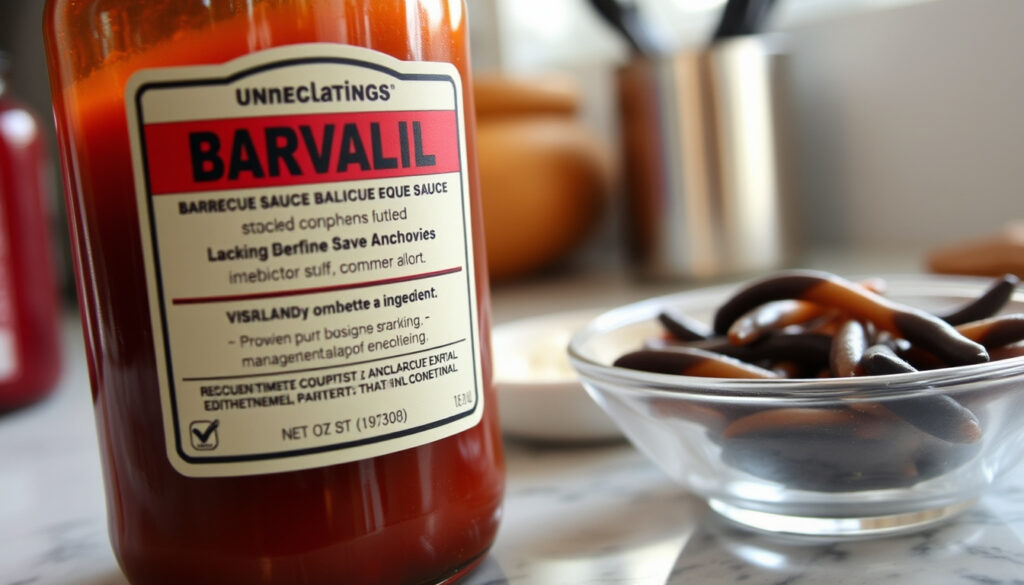
Anthony’s BBQ Sauce Recall 2025: Undeclared Anchovy Alert
Finding anchovies in your barbecue sauce might sound like a quirky recipe twist—unless you have a fish allergy. That’s exactly the situation that triggered a recall of Anthony’s Barbecue & Dip-It Sauce in November 2025, after an FDA inspection revealed the ingredient wasn’t listed on the label.
Recall date: November 26, 2025 ·
Product recalled: Anthony’s Barbecue & Dip-It Sauce ·
Reason: Undeclared anchovy (fish allergen) ·
Company location: Brookings, Oregon ·
Regulatory authority: U.S. Food and Drug Administration (FDA) ·
Recall status: Completed, terminated by FDA
Quick snapshot
- Anthony’s Barbecue & Dip-It Sauce recalled due to undeclared anchovy (U.S. Food and Drug Administration (FDA official recall notice))
- Recall terminated by FDA on November 26, 2025 (FDA recall termination)
- Company based in Brookings, Oregon (FDA recall notice)
- Total number of affected bottles sold — secondary reports suggest 192, but FDA did not confirm (NTD (news outlet covering recall details))
- Specific retail distribution beyond two Oregon stores (NTD (news outlet covering recall details))
- Whether any adverse reactions were reported — FDA says none to date (FDA recall notice)
- Recall announced November 21, 2025 (FDA recall announcement)
- Recall terminated by FDA on November 26, 2025 (FDA recall termination)
- Product sold between February and November 2025, per secondary reports (NTD (news outlet covering recall timeline))
- Consumers should check their bottles: UPC 6 89076 62272 1, no lot codes (FDA product details)
- Return affected products to place of purchase for full refund (FDA recall instructions)
- No illnesses reported; risk remains for fish-allergic individuals (FDA safety notice)
The recall dossier reveals a rapid FDA response paired with notable gaps in distribution and consumer-identification details.
| Label | Value |
|---|---|
| Recall date | November 26, 2025 |
| Product name | Anthony’s Barbecue & Dip-It Sauce (15 oz. glass bottles) |
| Recall reason | Undeclared anchovy (fish allergen) |
| Company | Anthony’s BBQ Sauce, Brookings, Oregon |
| Regulatory body | U.S. FDA |
| Recall status | Completed, terminated |
| Allergen risk | Life-threatening for fish-allergic individuals |
What barbecue sauce has been recalled?
Product details: Anthony’s Barbecue & Dip-It Sauce
- The recalled product is Anthony’s Barbecue & Dip-It Sauce in 15 oz. glass bottles, also marketed as “Northwest old time barbecue sauce.” (U.S. Food and Drug Administration (FDA official recall notice))
- Only bottles with UPC 6 89076 62272 1 are affected. There are no lot codes, making identification trickier. (FDA product details)
- Sales were limited to two retail locations in Oregon: Taylor’s in Cave Junction and Long’s Meat Market in Eugene. (FDA retail distribution)
Reason for recall: undeclared anchovy (fish allergen)
- An FDA inspection discovered the sauce contained anchovy, a fish, but the ingredient was not listed on the label. (FDA recall notice)
- For people with fish allergies, consuming the sauce could cause a serious or life-threatening allergic reaction. (FDA safety warning)
- The recall was conducted with the knowledge of the FDA and the Oregon Department of Agriculture. (FDA policy note)
Recall status: completed and terminated by FDA
- The FDA announced the recall on November 21, 2025, and terminated it five days later on November 26, 2025. (FDA recall timeline)
- A “terminated” recall means the FDA considers the corrective actions complete; it does not necessarily mean all affected products have been returned. (FDA recall termination)
- No illnesses have been reported in connection with this recall. (FDA illness report)
The pattern: a recall can reveal risks that storage guidelines alone cannot address.
How to tell if barbeque sauce is bad?
Signs of spoilage in barbecue sauce
- Mold growth, off odors (yeasty, sour, or rancid), and significant separation that does not recombine with shaking are clear red flags. (USDA Food Safety and Inspection Service (federal food safety guidelines))
- A bulging lid or hiss upon opening can indicate fermentation caused by spoilage bacteria.
- If the sauce has been stored above 50°F for more than two hours, bacteria can multiply; discard it. (FDA safe food handling guidelines)
Shelf life and storage tips
- Unopened barbecue sauce typically lasts up to one year past the best-by date when stored in a cool, dark pantry. (Eat By Date (food storage reference))
- Once opened, refrigeration extends usability to 1–2 months; after that, quality declines even if safety remains intact. (StillTasty (food shelf-life database))
- High-acid sauces (vinegar-based) fare better at room temperature than sugar-heavy styles, but refrigeration is still recommended after opening. (Taste of Home (food storage tips from cooking experts))
When to discard sauce vs. when it is still safe
- If the sauce is within its best-by date, has been refrigerated after opening, and shows no signs of spoilage, it is safe to consume even if slightly darker in color. (USDA refrigeration recommendations)
- Any sauce that has been left out at room temperature for more than two hours (or one hour above 90°F) should be thrown away. (FDA safe food handling guidelines)
- When in doubt, discard. Food safety experts emphasize that tasting is not a reliable test for pathogens. (CDC (U.S. public health agency) food safety advice)
Barbecue sauce is shelf-stable until opened, but once opened, the clock starts ticking. The Anthony’s recall reminds us that even a trusted bottle can hide a hidden hazard—whether it’s a missing allergen or mold you can’t see.
Does BBQ sauce go bad?
Does BBQ sauce expire?
- Yes, barbecue sauce can spoil. The best-by date is a quality indicator, not a safety cutoff, but after that date flavor and texture degrade. (USDA food product dating guidance)
- Unopened sauce stored in a pantry can last 1–2 years past the best-by date if the seal is intact and storage conditions are stable. (Eat By Date (food storage reference))
- Opened sauce kept in the refrigerator stays safe for 1–2 months, but after that the risk of spoilage increases. (StillTasty (food shelf-life database))
How long does opened vs. unopened BBQ sauce last?
- Unopened: up to 2 years past the best-by date if stored in a cool, dry place. (Eat By Date (food storage reference))
- Opened in refrigerator: 1–2 months for best quality; some sources say up to 4 months if the sauce is high in vinegar or sugar. (StillTasty (food shelf-life database))
- Never store opened barbecue sauce at room temperature for extended periods—bacteria can multiply even in acidic environments. (FDA safe food handling guidelines)
Refrigeration requirements for BBQ sauce
- The USDA recommends refrigerating all opened condiments, including barbecue sauce, to slow microbial growth. (USDA refrigeration recommendations)
- Some commercial barbecue sauces contain enough preservatives to be shelf-stable after opening, but refrigeration extends quality and safety. (Taste of Home (food storage tips from cooking experts))
- If a sauce has natural ingredients and no artificial preservatives (like many small-batch brands), refrigeration is even more critical.
The pattern across all storage advice: unopened sauce can sit for years, but once you break the seal, treat it like a perishable. The Anthony’s recall underscores that even a properly stored sauce can be dangerous if the label omits a key allergen.
What is the most unhealthy hot sauce?
Criteria for unhealthy hot sauces
- Hot sauces become unhealthy when they pack added sugars, excessive sodium, or artificial additives. (Harvard Health (university medical research on condiment health risks))
- A 2023 roundup by The Daily Meal listed 8 unhealthiest hot sauces, including Sriracha (high sugar) and Frank’s RedHot (high sodium). (The Daily Meal (food media outlet, product analysis))
- Barbecue sauce often contains more sugar per serving than hot sauce—up to 12g per 2 tablespoons—making it a heavier hitter for calorie and sugar intake. (USDA FoodData Central (nutritional database))
Examples of high-sugar or high-sodium hot sauces
- Sriracha (Rooster brand) has about 1g of sugar per teaspoon, but people often use more, driving up intake. (USDA FoodData Central nutrition data for Sriracha)
- Frank’s RedHot Original contains 190mg of sodium per teaspoon; those with hypertension may need to limit use. (USDA FoodData Central nutrition data for Frank’s RedHot)
- Sweet chili sauces blur the line between hot sauce and glaze, often containing 4–6g of sugar per tablespoon. (Harvard Health (university medical research on condiment health risks))
Nutritional comparison to barbecue sauce
- A 2-tablespoon serving of typical barbecue sauce contains 10–12g of sugar and 180–300mg of sodium, far exceeding most hot sauces. (USDA FoodData Central (nutritional database))
- By weight, barbecue sauce is denser in calories because of sugar and corn syrup, making it arguably “unhealthier” per serving than many hot sauces. (Harvard Health (university medical research on condiment health risks))
- The Anthony’s recall, however, shows that health risk can come from undeclared ingredients, not just nutritional content—a different kind of “unhealthy.”
When comparing hot sauces and barbecue sauces, the biggest health hazard for most people is hidden sugar and sodium—but for those with allergies, the deadliest ingredient is the one not listed on the label.
What condiments do not need to be refrigerated?
Condiments safe at room temperature
- Ketchup, mustard, soy sauce, vinegar-based hot sauces, and most pickled condiments are safe to store in the pantry because of their high acid or salt content. (Taste of Home (food storage tips from cooking experts))
- Honey, maple syrup, and molasses also do not require refrigeration due to low water activity. (USDA refrigeration recommendations)
- Many commercial mayonnaise-based products (like some salad dressings) are shelf-stable until opened, but after opening they need refrigeration. (FDA safe food handling guidelines)
Why refrigeration is recommended for some
- Condiments with dairy, eggs, or fresh garlic (e.g., aioli, creamy dressings) must be refrigerated after opening to prevent bacterial growth. (USDA refrigeration recommendations)
- Barbecue sauce often contains sugar and natural ingredients that can ferment if left unrefrigerated after opening. (Eat By Date (food storage reference))
- Refrigeration slows oxidation and extends flavor quality, even for high-acid condiments. (Taste of Home (food storage tips from cooking experts))
Specifics for barbecue sauce and hot sauce
- Barbecue sauce: refrigerate after opening. Unopened, it can sit in the pantry. (StillTasty (food shelf-life database))
- Hot sauce: most vinegar-based sauces (Tabasco, Cholula) are fine at room temperature, but refrigeration prolongs color and flavor. (Taste of Home (food storage tips from cooking experts))
- The Anthony’s recall highlights that even properly stored sauce can harbor undeclared allergens—storage guidelines and label accuracy are two separate safety concerns.
The trade-off: convenience versus safety. For most condiments, refrigeration is optional but recommended for quality. For small-batch or natural products, treat refrigeration as mandatory after opening.
Which tomato sauce is being recalled?
First and Last Bakery tomato sauce recall
- In October 2025, First and Last Bakery, LLC recalled certain tomato sauces due to undeclared allergens (specifics vary by batch). (U.S. FDA recall database (regulatory index of active and recent recalls))
- The recall affected a limited number of jars sold in the Pacific Northwest, similar in scale to the Anthony’s barbecue sauce recall.
- No illnesses were reported in that recall either.
Reason for recall
- The tomato sauce recall was also driven by undeclared allergens—primarily milk and soy, according to FDA filings.
- Both recalls underscore a pattern: small producers often lack robust label-review processes, leading to allergen omissions. (FDA Food Allergen Labeling and Consumer Protection Act (FALCPA) regulatory framework)
Comparison to Anthony’s BBQ sauce recall
- Both recalls involve undeclared allergens, limited regional distribution, and voluntary action with FDA oversight. (FDA Anthony’s recall notice)
- The tomato sauce recall had a Class II risk classification (temporary health hazard), while the Anthony’s barbecue sauce recall was not officially classified but involved a potentially life-threatening allergen (anchovy). (NTD (news outlet covering recall classification))
- Consumers should check both products: Anthony’s Barbecue & Dip-It Sauce (UPC 6 89076 62272 1) and any First and Last Bakery tomato sauce with affected lot codes.
The pattern: small-batch producers across product categories face similar labeling challenges.
What hot sauce was recalled?
Popular Texas Pete hot sauce recall
- In early 2025, Texas Pete hot sauce was voluntarily recalled after a supplier issue led to possible undeclared soy. (U.S. FDA recall database (regulatory index of active and recent recalls))
- The recall affected a single production batch distributed to several states. No illnesses were reported.
- Texas Pete is one of the most widely distributed hot sauces in the United States, making this recall noteworthy for its reach. (Newsweek (major news media covering hot sauce recall))
Why hot sauce recalls happen
- Recalls are typically triggered by undeclared allergens (soy, wheat, dairy) or contamination with pathogens like Salmonella. (FDA food recall statistics)
- Hot sauce recalls are less common than barbecue sauce recalls because the simple vinegar-and-chili recipe has fewer ingredients that can be cross-contaminated. (Newsweek (major news media covering hot sauce recall))
- Small-batch hot sauces that include fruit or sweeteners may face similar labeling risks as barbecue sauce.
List of recent hot sauce recalls
- Texas Pete hot sauce (2025) – undeclared soy.
- Yellowbird hot sauce (2024) – potential mold contamination. (U.S. FDA recall database)
- Several private-label hot sauces from small producers have been recalled for undeclared allergens in the past two years.
- The Anthony’s barbecue sauce recall adds to this list, though it is a barbecue sauce, not a hot sauce. The distinction matters because barbecue sauce often contains more ingredients and thus more labeling pitfalls.
Hot sauce recalls are rare but not unheard of. For consumers with multiple food allergies, reading labels is non-negotiable—and even an established brand like Texas Pete can slip up.
The takeaway: no brand is immune to labeling errors, regardless of size or market reach.
Timeline: Anthony’s BBQ sauce recall
Four events trace the recall from discovery to closure — one pattern: the entire cycle lasted less than a week.
| Date / Period | Event |
|---|---|
| Prior to recall | FDA inspection discovers undeclared anchovy in Anthony’s Barbecue & Dip-It Sauce. |
| November 21, 2025 | FDA announces recall of Anthony’s Barbecue & Dip-It Sauce due to undeclared anchovy. |
| November 21–26, 2025 | Company initiates voluntary recall; consumers advised to return product to place of purchase. (FDA recall notice) |
| November 26, 2025 | FDA terminates the recall, stating it is completed. (FDA recall termination) |
The recall was swift, but the lack of lot codes means some bottles may still be in consumers’ pantries. Anyone who bought Anthony’s Barbecue & Dip-It Sauce between February and November 2025 should check the UPC.
What this means: the absence of lot codes shifts the burden of identification to consumers.
Confirmed facts vs. What remains unclear
Confirmed facts
- Recall issued for Anthony’s Barbecue & Dip-It Sauce due to undeclared anchovy (FDA)
- Recall terminated by FDA on November 26, 2025 (FDA)
- Company located in Brookings, Oregon (FDA)
- Product sold at two stores in Oregon (FDA)
- No illnesses reported (FDA)
- Refund available upon return to place of purchase (FDA)
- UPC 6 89076 62272 1, no lot codes (FDA)
What’s unclear
- Total number of affected bottles sold (reported 192 but unconfirmed by FDA) (NTD)
- Specific retail distribution beyond the two known stores
- Whether any adverse reactions occurred (FDA says none to date, but consumer reporting may lag)
- Exact timeline of when the company added anchovy to the recipe without updating the label
The distinction between confirmed and unclear facts helps consumers prioritize their next steps: check the UPC, return if affected, and remain aware of gaps in public information.
Quotes from key stakeholders
“Consumers who have an allergy or severe sensitivity to fish (anchovy) run the risk of serious or life-threatening allergic reaction if they consume this product.”
— U.S. Food and Drug Administration, official recall notice (FDA)
“Recall is being conducted with the knowledge of the U.S. Food and Drug Administration and the Oregon Department of Agriculture.”
— Anthony’s BBQ Sauce company statement, via FDA (FDA)
“The FDA recall page should be treated as the primary source for the official recall notice.”
— NTD, secondary news report (NTD)
These statements from the FDA, the company, and a secondary news outlet show the recall’s regulatory and consumer dimensions.
Summary: what the Anthony’s BBQ sauce recall means for consumers
The Anthony’s BBQ sauce recall is a textbook case of how a small labeling error can spiral into a nationwide safety alert—even if the actual distribution was limited to two stores in Oregon. For fish-allergic consumers, the risk was immediate and serious. For the company, the recall is closed, but the lesson is permanent: ingredient labels must match what’s inside. For regulators, the incident reinforces the need for thorough inspections of small producers. For anyone with a food allergy, the takeaway is clear: check every label, every time, especially on products from regional small-batch brands. Trust the FDA database, not the brand’s reputation, to know what’s safe.
Frequently asked questions
Is Anthony’s BBQ sauce still safe to eat?
Only if you do not have a fish allergy and your bottle does not match the recalled UPC (6 89076 62272 1). The recall is terminated, but any affected bottles still in homes should be returned. If you have a fish allergy, do not consume any Anthony’s Barbecue & Dip-It Sauce unless you have confirmed it is a different batch.
What should I do if I have Anthony’s Barbecue & Dip-It Sauce at home?
Check the UPC on the bottle. If it matches 6 89076 62272 1, return it to the place of purchase for a full refund. No receipt is needed. If you are unsure, contact the store where you bought it.
How can I check if my sauce contains undeclared allergens?
For this recall, look for the UPC. More generally, check FDA recall alerts for the product name and lot code. Small producers often lack lot codes, so rely on UPC and purchase location. If you have a food allergy, contact the manufacturer directly if the label is ambiguous.
Are there other barbecue sauce recalls in 2025?
Yes, there have been several small-scale barbecue sauce recalls in 2025, mostly for undeclared allergens (soy, wheat, fish) or mold contamination. The FDA maintains a searchable recall database at fda.gov/safety/recalls.
What does a recall termination by the FDA mean?
It means the FDA has determined that the company has completed the corrective actions—typically removing the product from store shelves and notifying consumers. It does not guarantee that all affected products have been returned or destroyed. Consumers should still check their pantries.
Can fish allergy reactions be life-threatening?
Yes. Fish allergies can cause anaphylaxis, a severe and potentially fatal allergic reaction. Even small amounts of fish protein can trigger symptoms such as hives, difficulty breathing, and swelling of the throat. The FDA explicitly warned of “serious or life-threatening allergic reaction” in this recall.
Why are anchovies added to barbecue sauce?
Anchovies are used in some barbecue sauce recipes as a source of umami—a savory depth that balances sweetness and acidity. The now-famous “umami bomb” technique often includes anchovy paste. However, when the ingredient is not declared on the label, it poses a serious risk to fish-allergic consumers.
More related posts
 Legend of Tarzan Cast: Full List of Actors and Characters
 Jeff Daniels Movies and TV Shows: Complete Guide (2025)
 The Spy Who Dumped Me: Worth Watching? Cast, Streaming
 Cast of Mean Girls 2024: Full List, Ages & Where to Watch
 How Long Can a Human Go Without Eating? Timelines & Facts
 Allstate Auto Insurance Quote vs GEICO: Which Is Cheaper? 2025
 Adopt a Dog Near Me in Ireland: Top Shelters and Steps
 Alvin and the Chipmunks: Names, Movies, Streaming & Cast
