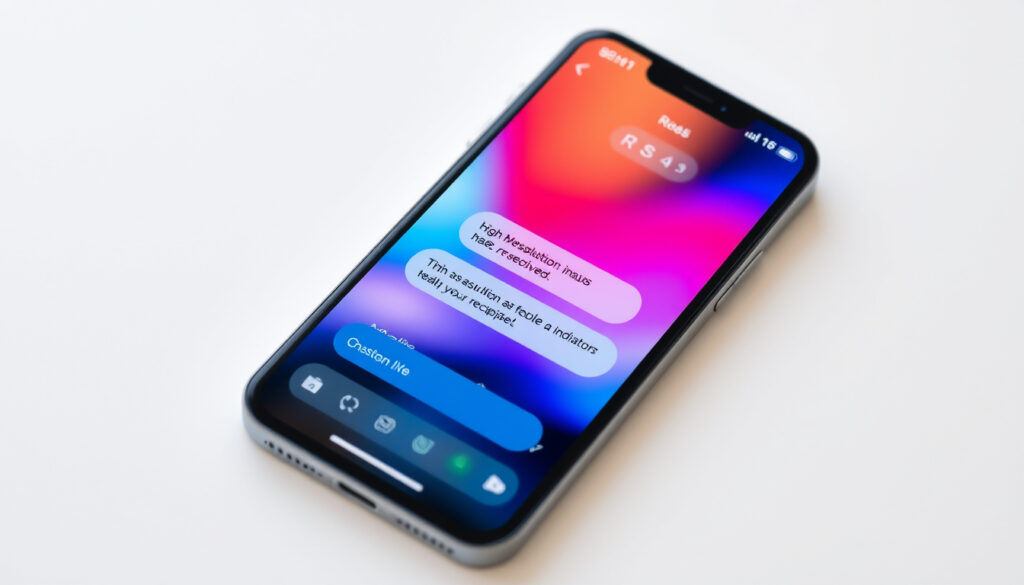
What Is RCS on iPhone – iOS 18 Features Guide
Apple’s integration of Rich Communication Services into iOS 18 marks a significant shift in how iPhone users communicate with Android devices. The protocol, developed by the GSMA, introduces features that have long been standard on Android messaging apps, including high-resolution media sharing, typing indicators, and read receipts.
Previously, iPhone users sending messages to Android contacts were limited to SMS and MMS, resulting in compressed photos, no delivery confirmation, and a notably basic messaging experience. RCS bridges this gap by bringing modern messaging capabilities to cross-platform conversations, though the implementation comes with specific technical nuances worth understanding.
The addition of RCS to iPhone reflects both competitive pressures and regulatory attention on messaging interoperability. As the protocol becomes more widely available through carrier support, iPhone users can expect a meaningfully improved experience when messaging friends, family, or colleagues who use Android devices.
What is RCS on iPhone?
RCS stands for Rich Communication Services, a messaging standard created by the GSMA that upgrades traditional SMS and MMS with modern features. On iPhone, RCS enables a substantially richer experience when sending messages to Android devices through supported carriers and apps like Google Messages.
When iPhone users send messages to Android contacts, those conversations now appear in green bubbles rather than the familiar blue associated with iMessage. This visual distinction carries functional implications, as RCS-enabled chats support features that were previously unavailable in cross-platform messaging.
Key Differences from Traditional Messaging
Several aspects set RCS apart from the SMS and MMS experience iPhone users have had with Android contacts. These differences affect both the sending and receiving experience, making cross-platform conversations feel more responsive and capable.
- Messages use cellular data or Wi-Fi rather than traditional SMS networks when available
- Photos and videos transmit in high resolution without compression artifacts
- Typing indicators show when the other person is composing a reply
- Read receipts confirm when a message has been delivered and viewed
- Links generate preview cards with thumbnails and descriptions
- Group conversations support up to 100 participants
- The conversation falls back to SMS if RCS is unavailable
RCS on iPhone provides encryption in transit but lacks end-to-end encryption when messages travel between iOS and Android devices. End-to-end encryption is only available when both participants use Android devices with Google Messages. Apple prioritizes iMessage’s security within its own ecosystem, meaning cross-platform RCS conversations have different protection characteristics than iMessage chats.
| Aspect | Details |
|---|---|
| Protocol Standard | GSMA RCS (Universal Profile) |
| iOS Introduction | iOS 18 (released Fall 2024) |
| Expanded Support | iOS 18.5 (mid-2025) |
| Message Appearance | Green bubbles (iPhone to Android) |
| Media Quality | High-resolution photos and videos |
| Group Messaging | Up to 100 contacts |
| Cross-Platform Encryption | In-transit only (not end-to-end) |
| Fallback Mechanism | Automatic SMS if RCS unavailable |
When is RCS Coming to iPhone?
Apple announced RCS support at WWDC 2024, with the functionality arriving as part of iOS 18 released in Fall 2024. The initial rollout focused on person-to-person messaging in select markets, with broader availability following through subsequent iOS updates.
Timeline of RCS on iPhone
The path from announcement to implementation spans several key moments that shaped when and how iPhone users gained access to RCS messaging capabilities.
- 2016 – The GSMA standardizes RCS as a universal messaging protocol for mobile networks worldwide
- November 2023 – Apple announces plans to support RCS on iPhone, responding to industry and regulatory pressure
- June 2024 – iOS 18 beta testing begins, including early RCS functionality for developers and testers
- Fall 2024 – iOS 18 publicly releases, bringing RCS to iPhone users with supported carriers
- Mid-2025 – iOS 18.5 expands RCS availability and functionality
Carrier Support and Regional Availability
RCS on iPhone requires active support from the user’s carrier, creating variation in availability across different providers and regions. Major carriers in the United States including Verizon, AT&T, and T-Mobile have enabled RCS support, while international availability varies by market and carrier.
Users in markets such as Japan and Australia have seen RCS become available through select providers. The fragmented nature of carrier rollouts means that not all iPhone users immediately gained access, even after updating to iOS 18. Checking with your specific carrier remains the most reliable way to confirm RCS availability.
To verify RCS availability on your iPhone, navigate to Settings > Apps > Messages and look for the RCS Messaging toggle. If the option is present and enabled, your carrier supports RCS. If the toggle does not appear, your carrier may not yet support the protocol, or you may need to update your account settings by contacting customer service.
What Features Does RCS Bring to iPhone?
RCS introduces a suite of capabilities that transform the iPhone-to-Android messaging experience from the limitations of SMS and MMS into something approaching the richness of modern messaging apps. These features address long-standing pain points for users communicating across platform lines.
Media and Content Sharing
One of the most noticeable improvements involves media sharing. Photos and videos sent from iPhone to Android devices maintain their original quality rather than being compressed to fit MMS constraints. This matters significantly when sharing high-resolution images, videos from recent events, or any media where image quality is important.
Links shared through RCS generate preview cards that display thumbnails, titles, and descriptions before the recipient clicks through. This feature, common on Android messaging apps, brings a more visual and informative experience to cross-platform conversations on iPhone.
Communication Indicators
RCS adds the typing and read receipt indicators that iPhone users have long enjoyed within iMessage. When composing a message, the recipient sees that the other person is typing. When a message is delivered and viewed, those status updates appear just as they would in an iMessage conversation.
These features reduce the uncertainty that characterized SMS conversations, where senders had no way to know whether their message had been received or read without an explicit reply.
Interactive Elements
RCS supports suggested replies that let users respond quickly with one tap, along with interactive buttons that businesses and services can use in verified conversations. Verified sender profiles help identify legitimate businesses and reduce spam, addressing a persistent issue in traditional SMS messaging.
RCS on iPhone does not replicate every feature of iMessage. Reactions, message scheduling, and other iMessage-specific capabilities do not carry over to RCS conversations with Android users. While RCS brings substantial improvements, it does not create a fully equivalent experience to messaging within the Apple ecosystem.
How Does RCS Compare to SMS and iMessage on iPhone?
Understanding how RCS fits into the existing messaging landscape helps clarify what the protocol does, what it does not do, and why Apple chose to implement it in a specific way.
RCS vs. SMS and MMS
SMS and MMS represent the baseline messaging experience on mobile phones. SMS handles plain text with a 160-character limit, while MMS extends this to include low-resolution media attachments. Neither protocol offers delivery confirmation, typing indicators, or media quality preservation.
RCS replaces this baseline with a data-based messaging experience. Rather than relying on voice network channels, RCS messages travel over cellular data or Wi-Fi, enabling richer content and real-time indicators. For iPhone users communicating with Android, this means moving from a fundamentally limited experience to one with meaningful modern features.
RCS vs. iMessage
iMessage remains Apple’s proprietary messaging service and continues to handle all communication between Apple devices. When an iPhone user messages another iPhone user, iMessage activates automatically, offering end-to-end encryption, Animoji, Memoji, and the full suite of Apple-specific features.
RCS enters the picture only when an iPhone user messages an Android device. In this scenario, iMessage cannot establish a connection, and the conversation falls back to either RCS (if supported) or SMS (if RCS is unavailable). The transition is seamless, with iOS automatically selecting the best available option.
| Feature | RCS (iOS 18) | iMessage | SMS/MMS |
|---|---|---|---|
| Compatibility | Android and iOS 18 (carrier-dependent) | Apple devices only | All phones |
| Media Quality | High-resolution photos and videos | High-resolution media | Compressed media only |
| Encryption | In-transit; E2EE Android-to-Android only | Full end-to-end encryption | None |
| Group Limit | 100 contacts | 32 contacts | Limited |
| Typing Indicators | Yes | Yes | No |
| Read Receipts | Yes | Yes | No |
| iPhone Bubble Color | Green | Blue | Green |
| Fall back Option | Automatic SMS | Automatic SMS/MMS for non-Apple | N/A |
The bubble color distinction matters for practical purposes. Blue bubbles indicate iMessage conversations with full encryption and Apple-only features. Green bubbles now indicate RCS or SMS conversations, helping users quickly identify the messaging mode in use.
How to Enable RCS Messaging on iPhone?
Activating RCS on iPhone requires meeting several prerequisites and then enabling the feature within iOS settings. The process is straightforward once carrier support is confirmed.
Requirements Before Enabling
Three conditions must be met before RCS can function on your iPhone. First, you need iOS 18 or later installed. Second, your carrier must support RCS on iPhone. Third, you need an active text messaging plan that includes data access.
Not all carriers have enabled RCS support, and those that have often rolled it out gradually across different regions and account types. Contacting your carrier’s customer service or checking their website provides the most accurate information about RCS availability for your specific account.
Activation Steps
Once you’ve confirmed that your carrier supports RCS, enabling the feature involves navigating to the Messages settings in iOS.
- Open the Settings app on your iPhone
- Scroll down and tap Apps
- Select Messages
- Find the RCS Messaging toggle and enable it
After enabling RCS, messages sent to Android contacts will automatically use the protocol when available. If RCS is not supported by the recipient’s carrier or device, the message falls back to SMS without any action required from the sender.
Why Did Apple Add RCS Support?
Apple’s decision to add RCS reflects several converging pressures. European regulators had scrutinized Apple’s messaging practices, with the Digital Markets Act raising questions about interoperability requirements. Google’s persistent public advocacy for RCS adoption also contributed to the shift in Apple’s position.
Beyond regulatory considerations, competitive dynamics played a role. Android messaging apps had offered RCS features for years, and iPhone users messaging Android contacts experienced a notably inferior experience that became increasingly difficult to justify. Apple recognized that improving cross-platform messaging aligned with broader user experience goals.
iOS 18 also supports Business RCS (RBM), enabling verified business profiles, interactive messaging, and rich notifications from participating businesses. This requires user opt-in and opens possibilities for more informative brand communications while maintaining spam protections through verified sender requirements.
What Remains Uncertain About RCS on iPhone?
While the core implementation of RCS on iPhone is established, several aspects remain in flux or unclear as the technology continues to roll out across different markets and carriers.
| Established Information | Remaining Uncertainties |
|---|---|
| RCS included in iOS 18 and later | Exact timeline for regional carrier rollouts |
| Green bubble indicates RCS or SMS | Long-term encryption roadmap for cross-platform messages |
| Supports HD media, typing/read receipts | Whether E2EE will extend to iOS-Android communications |
| Falls back to SMS when unavailable | Complete list of carriers offering RCS by market |
| Group messaging up to 100 participants | Future feature additions beyond initial release |
The encryption situation represents the most significant technical uncertainty. Currently, end-to-end encryption between iOS and Android devices via RCS is not implemented, with protection limited to in-transit encryption. Whether Apple and carriers will work toward E2EE for cross-platform RCS remains an open question.
The Broader Context of Cross-Platform Messaging
Apple’s adoption of RCS fits within a larger story of messaging fragmentation and the challenges of cross-platform communication. For years, iPhone and Android users have experienced a two-tier system where messaging within each platform offers rich features while cross-platform communication falls back to basic SMS.
RCS represents an industry-wide effort to establish a universal standard that brings modern messaging features to all mobile users regardless of device choice. Apple’s participation validates the protocol’s importance and accelerates adoption that had been slowed by Apple’s absence from the ecosystem.
The move also carries competitive implications. iMessage has served as a differentiator for Apple, with the blue bubble experience encouraging users to stay within the Apple ecosystem. By adding RCS, Apple improves the cross-platform experience without fundamentally altering iMessage’s advantages within its own ecosystem.
Sources and Industry Perspective
Apple’s announcement regarding RCS support came through the company’s official Apple Newsroom, confirming the commitment to bring richer messaging to cross-platform conversations. The GSMA, as the standards body behind RCS, has provided documentation of the protocol specifications that underpin the implementation.
Apple and Google announced plans to extend richer messaging between iPhone and Android, bringing RCS support to iOS devices and ensuring better interoperability across mobile platforms.
— Official announcement, Apple Newsroom (November 2023)
Technical documentation from Apple Support confirms the iOS implementation details, including the Settings location for enabling RCS, the requirement for carrier support, and the fallback behavior to SMS. Carriers including major providers in the United States have published RCS availability information through their customer support channels.
Summary
RCS on iPhone represents a meaningful upgrade to cross-platform messaging, bringing high-resolution media sharing, typing indicators, read receipts, and other modern features to conversations between iPhone and Android users. The protocol activates automatically when both parties have carrier support, falling back to SMS when RCS is unavailable.
Key considerations include the encryption limitations of cross-platform RCS, the carrier-dependent availability, and the fact that iMessage remains the preferred protocol for Apple-to-Apple communication. Users should verify their carrier supports RCS and ensure they have updated to iOS 18 or later to access these features. For those interested in understanding broader naming conventions and terminology in tech, the concept of standardized communication protocols shares roots with other technical standards that have shaped modern devices.
Frequently Asked Questions
Does RCS work on all iPhones?
RCS requires iOS 18 or later and a carrier that supports RCS on iPhone. Older iPhone models running earlier iOS versions cannot use RCS messaging regardless of carrier support.
Will RCS replace iMessage on iPhone?
No. iMessage continues to handle all messaging between Apple devices. RCS activates only when communicating with non-Apple devices such as Android phones. The two protocols serve different purposes within Apple’s messaging ecosystem.
Does RCS mean my messages to Android are now encrypted?
RCS provides encryption in transit but does not offer end-to-end encryption for messages between iOS and Android. End-to-end encryption is only available when both participants use Android devices with Google Messages. All iMessage conversations maintain full end-to-end encryption.
How is RCS different from SMS on iPhone?
RCS enables high-resolution photo and video sharing, typing indicators, read receipts, and link previews. SMS limits users to plain text and compressed media. RCS also supports group messaging up to 100 participants, compared to more limited group capabilities in SMS.
What should I do if my messages to Android are not going through?
Verify that both you and your recipient have carrier support for RCS. Check that your iPhone runs iOS 18 or later and that the RCS Messaging toggle is enabled in Settings > Apps > Messages > RCS Messaging. If issues persist, restarting your device or toggling airplane mode may resolve connectivity problems.
Is RCS available internationally?
Availability varies by country and carrier. Major US carriers including Verizon, AT&T, and T-Mobile support RCS on iPhone. International availability differs by market, with some countries and carriers still in the process of enabling support. Contact your specific carrier for confirmation.
Why do some iPhone messages appear as green bubbles?
Green bubbles indicate messages sent outside of iMessage, either through RCS or SMS/MMS. When messaging Android contacts with RCS support, conversations appear in green bubbles but retain the enhanced features of RCS. Only messages between Apple devices use blue bubbles.
More related posts
 Alvin and the Chipmunks (2007) Cast: Full List of Actors and Voices
 Dolce & Gabbana Shoes: How to Spot Fakes, Prices, Top Styles
 What Is Taylor Swift’s Real Name – Verified Birth Facts
 Jeff Daniels Movies and TV Shows: Complete Guide (2025)
 Who Won the Kentucky Derby 2025? Winner, Payouts & Results
 Translate Chinese to English: Best Free AI Translators
 Self Storage Near Me – Cheap Units Sizes Prices Waldorf MD
 How Many Felonies Was Trump Convicted Of? 34 Counts Explained
