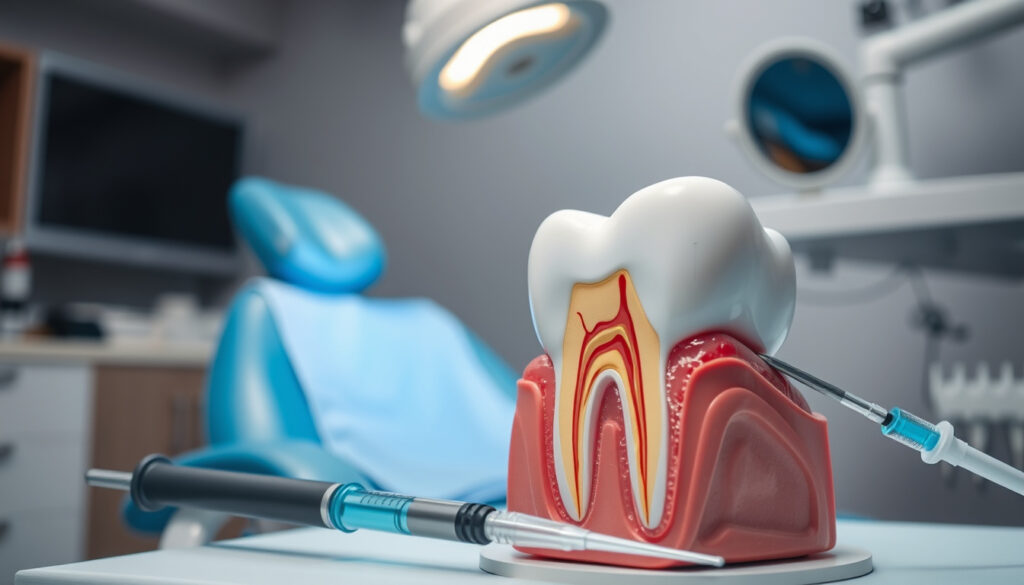
Kill Tooth Pain Nerve in 3 Seconds Permanently? No – What Works
Viral claims promise to kill tooth nerve pain in 3 seconds permanently, but no home remedy can safely destroy a tooth nerve that fast or forever. Over 90% of adults will experience tooth nerve pain, and the real solution is less dramatic but far more effective — this guide explains why the “3‑second kill” myth is dangerous and when to see a dentist.
Adults who experience tooth nerve pain at some point: over 90% ·
Average wait for a dental appointment: 3–7 days ·
Adults with untreated tooth decay (globally): over 1 billion ·
Root canal success rate: over 95%
Quick snapshot
- Clove oil provides temporary numbing for tooth nerve pain (Healthline (medical reference site))
- Cold compress reduces swelling and provides short-term relief (Cleveland Clinic (academic medical center))
- Root canal therapy permanently stops nerve pain from a damaged pulp (NHS (UK national health service))
- Whether turmeric directly fights tooth infection in humans (Medical News Today (medical news publisher))
- If garlic alone can eliminate a tooth infection without dental care (Healthline (medical reference site))
- Whether hydrogen peroxide rinse can fully treat a tooth abscess without professional care (Healthline (medical reference site))
- Pain lasting 2+ days: see a dentist (NHS (UK national health service))
- Swelling spreading to face or neck: emergency room immediately (AdventHealth (healthcare system))
- Root canal therapy or extraction for permanent relief (Cleveland Clinic (academic medical center))
- Antibiotics if bacterial infection is present (NHS (UK national health service))
Four key dimensions of tooth nerve pain, one pattern: temporary at-home measures work for hours, but only professional dental procedures provide permanent resolution.
| Dimension | Details |
|---|---|
| Most common cause of tooth nerve pain | Dental caries (cavity) that reaches the pulp |
| Average time from cavity to nerve pain without treatment | 6–12 months depending on tooth location |
| Success rate of root canal therapy | over 95% |
| Percentage of U.S. adults with untreated tooth decay | about 30% (CDC (U.S. public health agency)) |
| People who experience tooth nerve pain at some point | over 90% of adults |
| Average wait time for a dental appointment for toothache | 3–7 days |
| Number of adults with untreated tooth decay (globally) | over 1 billion (WHO (World Health Organization)) |
| Standard painkiller recommendation | Ibuprofen preferred over acetaminophen for tooth nerve pain (Cleveland Clinic (academic medical center)) |
How to stop tooth nerve pain asap?
- Apply a cold compress – reduces inflammation and numbs the area for up to 20 minutes (Cleveland Clinic (academic medical center)).
- Rinse with salt water – disinfects and soothes irritated gums (Healthline (medical reference site)).
- Use clove oil on the affected tooth – eugenol provides a natural anesthetic (Healthline (medical reference site)).
- Take over‑the‑counter pain reliever – ibuprofen is more effective than acetaminophen for tooth nerve pain (Cleveland Clinic (academic medical center)).
Apply a cold compress
- Cold compress reduces inflammation and numbs the area for up to 20 minutes. Hold it to the outside of the mouth or cheek for 5 to 10 minutes (Cleveland Clinic (academic medical center)).
The cold constricts blood vessels, which lowers blood flow to the inflamed nerve and eases the throbbing sensation.
Rinse with salt water
- Salt water rinse disinfects and soothes irritated gums. Mix 1 teaspoon of salt in 8 ounces of lukewarm water and swish for up to 30 seconds (Healthline (medical reference site)).
The rinse helps draw out fluid from swollen tissue and cleans the area around the tooth.
Use clove oil on the affected tooth
- Clove oil contains eugenol, a natural anesthetic. Apply a drop to a cotton ball and dab it on the painful tooth for up to 2 hours of relief (Medical News Today (medical news publisher)).
Take over-the-counter pain reliever
- Ibuprofen is more effective for tooth nerve pain than acetaminophen. Take it as directed on the label for temporary relief (Cleveland Clinic (academic medical center)).
The pattern: temporary relief does not equal cure — only a dentist can address the root cause.
What drink gets rid of toothache?
Peppermint tea
- Peppermint tea has mild numbing properties from menthol. Drink it warm (not hot) to soothe irritated gum tissue (Medical News Today (medical news publisher)).
Clove tea or clove water
- Clove water acts as a natural anesthetic. Steep whole cloves in hot water for 10 minutes, then sip slowly (Healthline (medical reference site)).
Warm salt water
- Warm salt water draws out infection and reduces swelling. It is often the first at-home step recommended for a toothache (Healthline (medical reference site)).
The implication: drinks work primarily through warmth (improving blood flow) and mild antimicrobial compounds, but none reach the nerve deep inside the tooth. They are surface-level comfort, not cures.
Never drink anything hot. Heat increases blood flow to an inflamed nerve and can make pain spike within minutes.
What this means: if you rely on drinks alone, you are treating symptoms, not the infection — the pain will return.
How to sleep with unbearable tooth pain?
Elevate your head with extra pillows
- Elevation reduces blood flow to the head, lessening the throbbing sensation. Sleep with 2-3 pillows to keep your head elevated above your heart (Healthline (medical reference site)).
Use a cold compress before bed
- Cold compress applied for 15 minutes numbs the area temporarily, making it easier to fall asleep (Cleveland Clinic (academic medical center)).
Take pain medicine 30 minutes before sleeping
- Ibuprofen is recommended 30 minutes prior to sleep for tooth pain, giving the anti-inflammatory effect time to kick in (Cleveland Clinic (academic medical center)).
Avoid eating or drinking acidic items before bed
- Acidic foods can aggravate exposed nerve endings. Skip citrus, soda, and vinegar-based dressings at least 2 hours before sleep (NHS (UK national health service)).
What this means: night pain is a hallmark of pulpitis — the nerve is inflamed inside the tooth. Elevation and timing medication right can help, but waking up with pain signals that the nerve is in trouble.
What kills a tooth infection naturally?
Garlic paste
- Garlic contains allicin, which has antibacterial properties. Crush a fresh clove into a paste and apply it to the gum near the painful tooth for 10 minutes, then rinse thoroughly (Healthline (medical reference site)).
Turmeric paste
- Turmeric has curcumin with anti-inflammatory and antimicrobial effects. Mix with a little water to form a paste and apply to the affected area (Medical News Today (medical news publisher)).
Tea tree oil rinse
- Tea tree oil diluted in water can kill oral bacteria. Add 2 drops to a cup of water, swish for 30 seconds, and spit. Do not swallow (Healthline (medical reference site)).
Hydrogen peroxide dilution rinse
- Hydrogen peroxide (3% diluted) used as a rinse can reduce infection. Mix equal parts with water, swish for 30 seconds, and spit. Never swallow (Healthline (medical reference site)).
The trade-off: natural antimicrobials can slow surface bacteria but cannot penetrate the tooth’s hard enamel and dentin to reach the infected pulp. A tooth abscess that causes facial swelling is a medical emergency — go to the ER (NHS (UK national health service)).
Why are painkillers not working for my toothache?
Inflammation inside the tooth blunts oral painkillers
- Standard painkillers are less effective against acute pulpitis because they target systemic pain, not localized nerve inflammation. The nerve sits inside a rigid tooth chamber where blood flow is limited (Medical News Today (medical news publisher)).
Nerve damage requires dental intervention
- Tooth nerve pain is often due to exposed pulp; only removing the pulp (root canal) ends the pain permanently (NHS (UK national health service)).
Dosage may be too low or timing off
- Doctors may prescribe stronger anti-inflammatories or combine with antibiotics if an infection is present. If over-the-counter doses fail, it is a sign the nerve is severely inflamed or dying (Cleveland Clinic (academic medical center)).
The pattern: if you are reaching for the bottle every 4 hours and still hurting, the problem is not weak medication — it is the wrong mechanism. Painkillers cannot relieve pressure inside the tooth.
A patient who relies on increasing painkiller doses while a tooth infection spreads risks sepsis. The most dangerous outcome of untreated dental infection is a brain abscess or airway closure.
The implication: persistent pain that resists medication is a red flag — see a dentist today.
What stops nerve pain immediately?
Cold compress application
- Cold compress constricts blood vessels, reducing swelling and numbing the nerve for up to 20 minutes. (See cold compress steps above.)
Clove oil or OTC oral gel
- Clove oil (eugenol) or over‑the‑counter oral gels containing benzocaine provide temporary numbing (Cleveland Clinic (academic medical center)).
Salt water rinse
- Salt water helps clean the site and reduce inflammation temporarily (Healthline (medical reference site)).
These three methods provide immediate but short‑lived relief. They do not treat the underlying nerve damage.
Kill tooth pain nerve home remedies – do any work?
No home remedy can permanently kill a tooth nerve
- Clove oil and numbing gels only provide temporary relief, not permanent nerve destruction. Never attempt to “kill” the nerve with alcohol, bleach, or other chemicals — they can cause severe tissue damage and infection (Cleveland Clinic (academic medical center)).
Professional root canal therapy is the only permanent solution
- Root canal treatment or extraction are the only proven methods to permanently stop nerve pain. The procedure removes the inflamed or infected pulp, disconnecting the nerve (NHS (UK national health service)).
When to see a dentist immediately
- Pain lasting more than 2 days, swelling in the face or neck, fever, foul-tasting discharge, trouble breathing or swallowing — these are emergency signs (NHS (UK national health service)).
For the person waking at 3 AM with a tooth throb, the choice is clear: use a cold compress and ibuprofen to get through the night, then call a dentist in the morning. No viral trick is worth risking your jaw or your life. For more on tooth pain relief home remedies, see our in‑depth guide. Also be aware of dental emergency warning signs that require immediate care.
“See a dentist if you have toothache that lasts more than 2 days.”
NHS (UK national health service)
“To permanently kill a tooth nerve requires root canal therapy or tooth extraction.”
“A cold compress can help reduce inflammation and numb the area.”
Medical News Today (medical news publisher)
For the person scrolling for a 3-second solution, the implication is clear: your tooth nerve pain will not die from a spice or a rinse. It needs a dentist. Call one today, or the pain — and the infection — will get worse.
carlstondentalgroup.com, totalcare.us, wearefamdent.com, artisandentalbellevue.com, kidstoothcare.com, ednadentistry.com, aviladental.com
For those seeking immediate relief, understanding the reality behind root canal treatment can help separate myth from effective dental care.
Frequently asked questions
Can clove oil permanently kill a tooth nerve?
No. Clove oil numbs the nerve temporarily via eugenol but does not destroy nerve tissue. Permanent cessation of tooth nerve pain requires root canal therapy or extraction (Healthline (medical reference site)).
Is it safe to put aspirin directly on a tooth for pain relief?
No. Placing aspirin directly on the gum causes chemical burns and tissue damage. Swallow it according to label instructions for systemic relief (Cleveland Clinic (academic medical center)).
What does it mean if my toothache goes away suddenly?
It may mean the nerve has died (pulp necrosis). The infection is still present and can spread to the jaw or bloodstream. See a dentist immediately (NHS (UK national health service)).
Can I use hydrogen peroxide for a tooth infection?
Yes, diluted hydrogen peroxide (3% solution mixed with equal parts water) can be used as a mouth rinse to reduce bacteria. Do not swallow. It is a temporary measure (Healthline (medical reference site)).
How long can a tooth nerve die before it causes an abscess?
Nerve death can progress to an abscess within days to weeks. Bacteria trapped inside the tooth migrate to the tip of the root, forming a pocket of pus. Prompt treatment is required (NHS (UK national health service)).
What is pulp necrosis and how does it relate to nerve pain?
Pulp necrosis is the death of the dental pulp (nerve and blood supply). It often follows severe decay or trauma. The pain may stop as the nerve dies, but the infection remains and can spread (Cleveland Clinic (academic medical center)).
Should I avoid hot or cold foods with tooth nerve pain?
Yes. Extreme temperatures aggravate inflamed nerve endings. Stick to lukewarm foods and drinks until a dentist evaluates the tooth (Healthline (medical reference site)).
For the person with throbbing tooth pain right now, the choice is clear: use cold compresses and ibuprofen for tonight, then call a dentist tomorrow. Permanent “nerve killing” is not a home trick — it is a medical procedure. The infection will not wait, and neither should you.
More related posts
 Sabrina Carpenter and Barry Keoghan Breakup: Timeline and Age Gap
 Dawn of the Black Hearts Cover: Facts and History
 Jaren Jack on Jr. Trade, Injury & Career: Late t Update
 Taylor Swift Merch Store: Official Guide to Avoid Fakes
 Where to Eat Near Me: Dublin, Cork & Traditional Irish Food
 American Horror Story Season 10: Double Feature Explained
 How Old Is Riley Green? Age, Birthday & Bio (2025)
 Dolce & Gabbana Shoes: How to Spot Fakes, Prices, Top Styles
