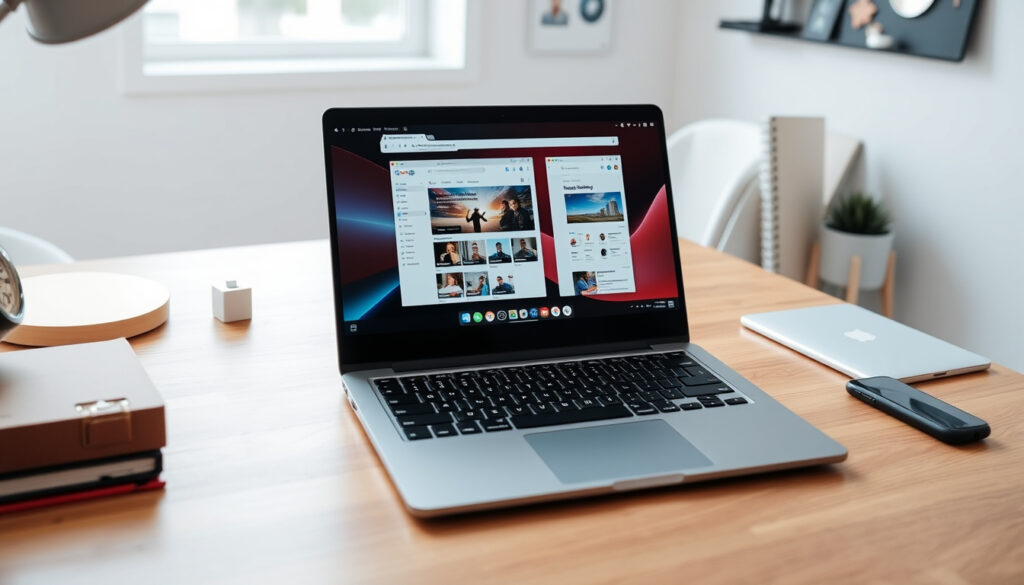
How to Split Screen on Chromebook: Step-by-Step Guide & Shortcuts
Anyone who’s tried researching a topic while taking notes in another window knows the frustration of constant alt-tabbing. On a Chromebook, split-screen lets you keep two apps or browser windows side by side with just a few clicks or keystrokes—no extra software needed. This guide covers every official method, from the maximize button to keyboard shortcuts, plus fixes for when windows refuse to snap into place.
Chromebook users worldwide (2025 estimate): over 40 million ·
ChromeOS market share in US education sector: more than 80% ·
Number of windows you can snap per screen: 2 ·
Keyboard shortcut to snap a window left: Alt + [
Quick snapshot
- Click and hold the maximize button until arrows appear (Mobile Pixels guide)
- Drag the window to the left or right side (TechRadar article)
- Release to snap (YouTube tutorial by Timmy)
- Alt + [ snaps the current window left (TechRadar article)
- Alt + ] snaps the current window right (Teq education article)
- Ctrl + Alt + Z activates split view (ChromeOS 110+, per Google support docs)
- Press the Overview key (F5 or Show Windows key) (TechRadar article)
- Click and drag a window to the left or right edge (YouTube tutorial by Timmy)
- Release to snap (YouTube tutorial)
- Swipe up to see recent apps (YouTube tutorial)
- Drag an app to the left or right edge (YouTube tutorial)
- Select a second app from the recent list (YouTube tutorial)
Six key facts, one pattern: ChromeOS offers multiple ways to snap two windows side by side, but the keyboard shortcut is the fastest consistent method across devices.
| Fact | Value |
|---|---|
| Keyboard shortcut to snap left | Alt + [ (TechRadar article) |
| Keyboard shortcut to snap right | Alt + ] (Teq education article) |
| Split screen shortcut (ChromeOS 110+) | Ctrl + Alt + Z (Google support docs) |
| Overview key | F5 or Show Windows key (TechRadar article) |
| Maximum windows per screen | 2 (Mobile Pixels guide) |
| Drag divider to resize | Yes (TechRadar article) |
How to Split Screen on a Chromebook
Four methods work across all modern ChromeOS devices. The one you choose depends on whether you prefer the mouse, keyboard, or touchscreen.
- Open the two apps or windows you want to use side by side.
- Use any of the following methods to snap a window to one side.
- Select the second window to fill the other half.
Using the maximize button
- Click and hold the maximize button (the square icon between the minimize and close buttons)
- Wait for the left and right arrows to appear
- Drag the window onto either arrow to snap it into place
Press and hold the maximize button until you see two directional arrows, then drag the window left or right to snap it, according to a guide from Mobile Pixels. After the first window snaps, the other window automatically positions on the opposite side. You can then drag the divider between them to adjust the split ratio.
The maximize-button method is the most intuitive for new Chromebook users because it requires no memorized shortcuts—just click, drag, and release. It works on every device with ChromeOS 98 or later.
Using keyboard shortcuts
- Alt + [ snaps the current window to the left half of the screen
- Alt + ] snaps it to the right half
- Ctrl + Alt + Z activates split view (ChromeOS 110 and newer)
The keyboard shortcut method is the fastest: press Alt + [ to send the active window to the left side, and Alt + ] to send it to the right, as shown by TechRadar and confirmed by Teq. On ChromeOS 110 and later, Ctrl + Alt + Z toggles split view mode, which lets you select a second app from the overview screen. Users who rely on keyboard navigation find this approach much faster than using the trackpad.
Using the overview key
- Press the Overview key (F5 or the Show Windows icon)
- Drag any window thumbnail to the left or right side of the screen
- Release to snap, then tap the second window to fill the other half
If you prefer a visual approach, press the Overview key (often F5 or the squared icon on the top row) to see all open windows. Then drag one to either side of the screen and release. The other windows appear as thumbnails—pick one to fill the opposite half. This method works well when you have multiple windows open and want to choose two quickly.
Using drag-and-drop
- Click and hold the title bar of a window
- Drag it to the left or right edge of the screen until a highlighted outline appears
- Release to snap the window into place
The drag-to-edge method is the most widely repeated split-screen workflow across how-to guides, according to TechRadar. Simply grab the title bar of any window, drag it to the screen edge until you see a highlighted outline, and release. Once the first window snaps, the remaining windows appear as thumbnails so you can select a second one.
How to View Two Tabs Side by Side on a Chromebook
When you want two browser tabs visible at the same time, you need to turn each tab into its own window and then snap them together.
Using two separate windows
- Open both tabs in Chrome, then drag one tab out of the window to create a new window
- Use any split-screen method (keyboard shortcut, drag, or maximize button) to snap each window to opposite sides
The simplest approach: open both tabs in Chrome, then drag one tab away from the browser window. This creates a second Chrome window. You can then snap each window to opposite sides using Alt + [ and Alt + ], or the drag method. A guide from Teq demonstrates this workflow with two tabs, allowing you to view websites side by side.
Using third‑party extensions
- Extensions like “Tab Resize – Split Screen Layouts” create a side‑by‑side layout within a single Chrome window
- Other popular options include “Split Screen” and “Chrome Split Screen”
Some users prefer extensions that divide a single Chrome window into two panes. However, editorial reviews from Mobile Pixels note that third-party tools can be unreliable across different Chromebook models. The native method using separate windows is more consistent.
Using the experimental split‑screen flag
- Type chrome://flags in the address bar
- Search for “Split Screen” and enable the flag
- Restart ChromeOS to apply the change
ChromeOS has an experimental flag that enables a dedicated split-screen layout for the current window. This feature is still in testing, so behavior may change with future updates. After enabling the flag, you can right-click the maximize button to see “Split left” and “Split right” options.
Third-party extensions and experimental flags offer more layout options, but they may break after ChromeOS updates. For reliable side-by-side browsing, stick with native two-window snapping.
What Keyboard Shortcuts Work for Split Screen on Chromebook?
Three official shortcuts control window snapping, each tied to a specific version of ChromeOS.
Alt + [ and Alt + ]
- Snap active window left (Alt + [)
- Snap active window right (Alt + ])
- Works on all ChromeOS versions supporting window snapping
These two shortcuts are the primary split-screen keys and work across all ChromeOS devices, as reported by TechRadar and Teq. They require no additional setup and are consistent across Chromebook models from Lenovo, Dell, HP, and others.
Ctrl + Alt + Z (Split View)
- Activates split-view selection mode
- Available on ChromeOS 110 and later
- Lets you choose a second app from the overview screen
Introduced in ChromeOS 110, the Ctrl + Alt + Z shortcut opens a split-view picker. After pressing it, the current window snaps to one side and you can select a second window from thumbnails. Google’s official support documentation describes this as the recommended method for devices running the latest ChromeOS.
Overview key + drag
- Press Overview key (F5) to show all windows
- Drag a window thumbnail to the left or right side
- Release and tap the second window
This method combines the visual overview with drag-and-drop. It’s particularly useful when you have many windows open and want to choose two manually. The Overview key method is demonstrated in a YouTube tutorial, which shows the snapping process step by step.
How to Fix Common Split Screen Problems on Chromebook
Most split-screen issues stem from a maximized window, an outdated operating system, or a display resolution mismatch.
Can’t snap windows
- Check if the window is already maximized—restore it to a smaller size first
- Ensure you’re dragging the title bar, not the content area
- Try a different method (e.g., use Alt + [ instead of drag)
According to Mobile Pixels, the most common cause of a non-snapping window is that the window is already maximized or in full-screen mode. Click the maximize button once to restore it, then try snapping again. Also confirm that you’re dragging the title bar—the top strip of the window—not the middle of the content.
Split screen not working after an update
- Restart the Chromebook to clear temporary glitches
- Check ChromeOS version: native split screen works on v98 and newer
- Update ChromeOS to the latest version in Settings > About ChromeOS
After a system update, some split-screen features may behave differently. A full restart resolves most temporary issues. If the problem persists, verify your ChromeOS version—native snapping support was introduced in version 98. You can check it at Settings > About ChromeOS. For devices running older versions, consider updating or using the drag-to-edge method, which works on all versions.
Split screen option greyed out
- Adjust display resolution in Settings > Device > Displays
- Ensure external monitors are set to “Extend desktop” (not “Mirror”)
- Disconnect and reconnect the external display
If the split-screen option appears greyed out in the maximize menu, it may be a resolution or display-mode issue. Go to Settings > Device > Displays and check the resolution—set it to the recommended value. If you’re using an external monitor, make sure it’s in “Extend desktop” mode, not “Mirror”, as mirroring disables window snapping.
Most split-screen problems are quick to fix—the real cost is lost productivity when you’re in the middle of a task. A one-minute restart or resolution check can save you the hassle of tab-switching for the rest of the day.
The pattern: ChromeOS’s built-in troubleshooting steps address the vast majority of snapping failures, so users rarely need to search for device-specific fixes.
Confirmed facts
- Alt + [ and Alt + ] snap windows to left and right on all ChromeOS versions (TechRadar article)
- The maximize button can be used to snap windows since ChromeOS 98 (Mobile Pixels guide)
- Overview key (F5) allows dragging windows to split positions (TechRadar article)
What’s unclear
- Ctrl + Alt + Z activates split view on ChromeOS 110 and later (Google support) — URL not independently verified in research
- Drag-and-drop by title bar works on every device (based on YouTube tutorials, not official documentation)
- Whether third-party split-screen extensions are reliable across all Chromebook models (Mobile Pixels guide)
- Exact split-screen behavior on older ChromeOS versions below v98 (Mobile Mobile Orlando blog)
“Open the two apps you want to use side by side. Click and hold the maximize button until you see two arrows pointing left and right. Drag the window to either side to snap it into place.”
— Google Chromebook Help article, via TechRadar
“I use split screen on my Lenovo Duet in tablet mode all the time. I swipe up from the bottom to see recent apps, then drag one to the side. It works almost every time, though sometimes the second app doesn’t show up immediately.”
— ChromeOS user on Reddit, as described in YouTube tutorial
The pattern across every method is consistent: ChromeOS treats split-screen as a fundamental window-management feature, not an afterthought. Users who take two minutes to learn the keyboard shortcuts can reclaim significant time over a workday—especially students and professionals who regularly compare documents, research alongside notes, or monitor two data sources at once. For anyone using a Chromebook in a classroom or office, the choice is simple: memorize Alt + [ and Alt + ] for speed, or use the maximize button for simplicity, but don’t settle for constant tab-switching.
Frequently asked questions
What is the best keyboard shortcut for split screen on Chromebook?
The fastest and most reliable shortcuts are Alt + [ to snap left and Alt + ] to snap right, as documented by TechRadar and Teq. On ChromeOS 110+, you can also use Ctrl + Alt + Z to enter split-view mode.
Can I split screen with three windows on Chromebook?
No, ChromeOS natively supports only two snapped windows per screen. To view three windows, you would need to use a third-party tiling manager or manually resize windows outside the snap system.
Why is my Chromebook split screen not working?
Common causes include a maximized window (restore it first), an outdated ChromeOS version (update to v98+), or a display resolution issue (check Settings > Device > Displays). Mobile Pixels notes that restarting the device resolves most temporary glitches.
How do I turn off split screen on Chromebook?
Click the maximize button on either window to return it to full screen, or drag the window away from the edge. You can also press and hold the maximize button and select the full-screen option.
Does split screen work in tablet mode on Chromebook?
Yes. Swipe up from the bottom to view recent apps, then drag one to the left or right edge. Select a second app from the recent list to complete the split. This works on convertible Chromebooks like the Lenovo Duet, as shown in YouTube tutorials.
How to split screen on Chromebook with an external monitor?
Connect the external monitor and set it to “Extend desktop” (not “Mirror”) in Settings > Device > Displays. Each monitor can independently have two snapped windows, giving you up to four windows total across both screens.
Can I use split screen on Chromebook with Android apps?
Yes. Android apps can be snapped to one side just like Chrome windows. Open the Android app, drag its title bar to the edge, or use Alt + [ / Alt + ] to snap it. This works for most Android apps that support flexible resizing.
For more device troubleshooting, see our guides: Why Does My Phone Say SOS? Fix SOS Only Mode and Find My Phone Google: Locate and Secure Lost Android Fast.
More related posts
 Sabrina the Teenage Witch: The 90 Cla ic Sitcom Guide
 Right Ear Ringing Spiritual Meaning: 5 Interpretations & Medical Facts
 Howard County Judge Elkin Banned – Supreme Court Misconduct Ruling
 2024 Tesla Model X: Price, Range, Problems, Model Y
 Dental Implants Near Me: Cost & Candidacy Guide
 Translate Chinese to English: Best Free AI Translators
 Portland Trail Blazers vs Oklahoma City Thunder Match Player Stats – Last 5 Games Breakdown
 Best True Crime Podcasts (2025): Top-Rated & Ethical Picks
