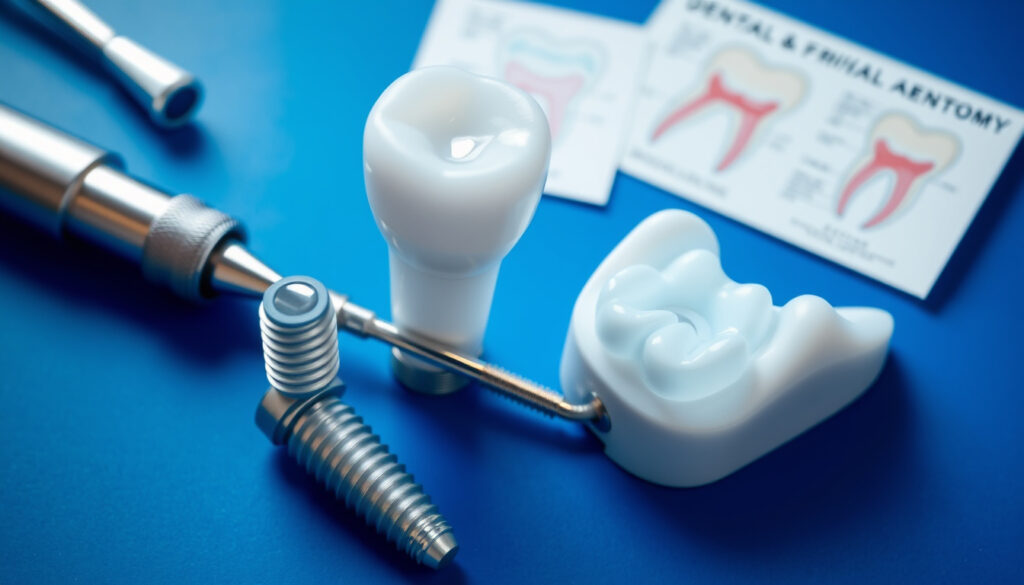
Dental Implants Near Me: Cost & Candidacy Guide
If you’re searching for “dental implants near me” in Ireland, you’ve probably noticed that prices vary wildly from clinic to clinic. One practice might quote €1,500 per tooth, while another starts at €3,500. This guide breaks down the real costs, candidacy criteria, and risks so you can make an informed choice.
Average cost single implant (Ireland): €1,500 – €3,000 · Full arch (All-on-4): €10,000 – €30,000 · Success rate (10-year): 95–98% · Smoker failure risk: 2–3 times higher
Quick snapshot
- Smoking raises implant failure risk 2–3 times (Docklands Dental)
- Dental implants have a 95–98% 10-year success rate in healthy patients (WhatClinic)
- Full-mouth implant treatment (All-on-4) starts at €11,000 per arch (3Dental)
- Exact cost for an individual patient without a clinical examination
- Long-term outcomes in patients with severe medical conditions (limited data)
- Initial consultation: Week 1
- Extraction and bone grafting: Month 1–2
- Implant placement and osseointegration: Month 3–6
- Abutment and final crown: Month 4–9
- Book consultations with at least two Irish clinics to compare quotes (Docklands Dental)
- Ask about bone grafting needs and whether you qualify for same-day implants (Docklands Dental)
- Check if your private insurance offers partial reimbursement (typically €200–€500) (Docklands Dental)
Six key facts, one pattern: Irish implant costs span a wide range depending on arch type and clinic, while success remains high for non-smokers with good bone health.
| Fact | Value |
|---|---|
| Average cost single implant (Ireland) | €1,500 – €3,000 |
| Average cost full arch (All-on-4) | €10,000 – €30,000 |
| Success rate (10-year) | 95–98% |
| Treatment duration | 4–9 months (typical) |
| Smoker failure risk | 2–3 times higher than non-smoker |
| Bone grafting required? | In about 30–50% of cases |
How much do dental implants cost in Ireland?
Full mouth implant cost ranges
According to pricing published by Irish clinics, a single dental implant with crown typically costs between €2,000 and €2,500 (3Dental). However, Docklands Dental quotes a wider range of €2,500 to €3,500 per tooth. For full-arch restorations, the tab rises sharply: Truly Dental lists All-on-4 treatment starting at €7,500 per arch, while 3Dental quotes €11,000 per arch for a full-mouth solution.
Across the border, Precision Implant Clinic in Belfast charges from £2,350 per implant and £15,000 for a full arch.
Single vs multiple implant pricing
- Single implant: €1,540–€3,500 (3Dental starting price €770 for implant only)
- Implant-supported bridge (2–4 teeth): €5,000–€8,000 (Docklands Dental)
- Implant-retained denture (per arch): from €3,850 for new denture + 2 implants (3Dental)
Patients in Ireland face a 2× cost spread between clinics for the same procedure. The gap means price-shopping can save thousands, but cheaper quotes may exclude bone grafting or final crown costs.
Why are dental implants so cheap in Turkey?
Turkish clinics often advertise all-inclusive packages for €400–€800 per implant, far below Irish rates. Seapoint Clinic notes that while upfront costs abroad are lower, follow-up care and travel expenses add up. The Irish Dental Association advises patients to factor in aftercare, warranty, and the risk of complications when treatment is performed overseas.
Can you have dental implants if you smoke?
Smoking and implant failure risk
Smokers face a substantially higher risk of implant failure. Docklands Dental states that smoking reduces blood flow to the jaw and increases infection rates, raising the failure risk 2–3 times compared with non-smokers. A 2016 meta-analysis in the Journal of Dental Research found a similar odds ratio of 2.2–2.6 for smokers.
How long to stop smoking before surgery
Most oral surgeons recommend quitting at least 2 weeks before surgery and remaining smoke-free for 2 months afterward to allow proper osseointegration. 3Dental advises patients that smoking within the healing phase can disrupt bone-to-implant fusion and lead to early failure.
What happens if you smoke 3 days before surgery?
Smoking just before surgery constricts blood vessels and impairs healing from the start. While one cigarette may not cause immediate failure, it delays tissue recovery and increases the chance of post-operative infection. The safest approach: stop smoking entirely before the procedure.
Even occasional smoking during the healing window doubles or triples the odds of losing the implant. Irish clinics routinely refuse surgery to heavy smokers unless they commit to a cessation plan.
This means that smokers who wish to proceed must adhere to strict cessation protocols to maximise success.
What is the downside to dental implants?
Surgical risks and complications
- Infection at the implant site (peri-implantitis) affects 10–15% of implants within 10 years
- Nerve damage can cause numbness in the lip, chin, or gums
- Sinus problems when implants in the upper jaw protrude into the sinus cavity
- Implant loosening due to poor osseointegration or excessive bite force
Long treatment timeline
The entire process from consultation to final crown typically takes 4–9 months. Bone grafting adds another 3–6 months to the calendar. 3Dental notes that immediate‑load implants (same day) are possible only for carefully selected patients.
Cost and insurance limitations
Docklands Dental says most Irish insurance plans do not cover the full cost of implants; some contribute €200–€500 toward the crown under major dental benefits. However, dental implants qualify for medical expenses tax relief in Ireland — 20% can be claimed back through Revenue’s Med 1 form (Docklands Dental).
Who cannot have dental implants?
Medical contraindications
- Uncontrolled diabetes — impairs healing and raises infection risk
- Active cancer treatment — chemotherapy and radiation affect bone quality
- Heavy smoking — many Irish clinics require cessation
- Immune disorders — e.g., rheumatoid arthritis, HIV with low CD4 count
- Bisphosphonate therapy — increases risk of osteonecrosis of the jaw
Bone density requirements
Sufficient jawbone volume is critical. If the bone has resorbed after tooth loss, a bone graft is needed — required in roughly 30–50% of cases according to Irish dental sources. Patients with severe atrophy may not be candidates even with grafting.
Age and lifestyle factors
Young patients whose jaws are still growing (under 18–20) should wait until skeletal maturity. Older adults in good health can receive implants; age alone is not a disqualifier.
Candidacy is a two-way street: your health and habits determine eligibility. A thorough assessment at an Irish clinic includes a CT scan to measure bone volume.
Therefore, candidacy is determined by a combination of health status and bone quality, not by age alone.
How painful is a full mouth implant procedure?
Pain management during and after surgery
The procedure is performed under local anaesthesia or sedation; patients report feeling pressure but not sharp pain during surgery. Post‑operative discomfort is manageable with prescribed painkillers and ice packs. An anonymised patient testimonial from an Irish clinic described the first 48 hours as “uncomfortable but not unbearable.”
Can I have all my teeth removed and replaced with implants on the same day?
Yes — the All-on‑4 technique enables same‑day full‑arch implants in suitable candidates. Truly Dental offers this option for patients with adequate bone and healthy gums. However, not every clinic offers it, and the implant must be carefully torqued to avoid failure.
Recovery timeline
- Days 1–3: swelling, mild to moderate pain, soft-food diet
- Week 1: pain subsides; stitches removed
- Months 3–6: osseointegration (bone grows around implant)
- Month 4–9: final crown placed
Comparison: Implant types at a glance
Three options, one pattern: more implants mean higher cost but greater stability for multiple missing teeth.
| Type | Best for | Typical cost (Ireland) | Treatment time |
|---|---|---|---|
| Single implant | One missing tooth | €1,500–€3,500 | 4–6 months |
| Implant-supported bridge | 2–4 adjacent missing teeth | €5,000–€8,000 | 5–7 months |
| Full arch (All-on-4) | All teeth on one or both arches | €10,000–€30,000 | 4–9 months |
The pattern: choosing the right implant type depends on the number of missing teeth and budget.
Specifications: Dental implant materials and design
Six specs, one takeaway: titanium remains the gold standard for osseointegration, but zirconia is gaining ground for aesthetics.
| Specification | Common value |
|---|---|
| Implant material | Titanium (Grade 4 or 5) or zirconia |
| Surface treatment | Sandblasted, acid‑etched (SLA) for bone bonding |
| Abutment material | Titanium or ceramic (zirconia) |
| Crown material | Porcelain fused to metal, zirconia, or lithium disilicate |
| Implant diameter | 3.0–6.0 mm |
| Implant length | 8–18 mm (maxilla), 10–15 mm (mandible) |
These specifications show that material choice impacts both cost and outcome, with titanium remaining dominant for its proven osseointegration.
Pros and cons of dental implants
Upsides
- Long‑lasting (10+ years with proper care)
- Preserves jawbone and facial structure
- Feels and functions like natural teeth
- Does not affect adjacent healthy teeth
Downsides
- High upfront cost (€1,500–€30,000)
- Surgical risks (infection, nerve damage)
- Long treatment timeline (up to 9 months)
- May require bone grafting
- Not an option for heavy smokers or uncontrolled diabetics
The trade-off is clear: higher upfront investment for longevity and bone preservation versus lower cost but shorter lifespan for alternatives.
What we know vs what remains unclear
Confirmed facts
- Smoking significantly increases implant failure risk (Docklands Dental)
- Dental implants have a 95–98% 10‑year success rate in healthy patients (WhatClinic)
- Cost varies widely based on number of implants, materials, and clinician expertise (3Dental)
What remains unclear
- Exact cost for an individual patient without a clinical examination
- Long‑term outcomes in patients with severe medical conditions (limited data)
Patients should weigh established facts against individual uncertainties when making their decision.
What patients and experts say
“A thorough consultation with a qualified implant dentist is non‑negotiable. Every patient’s oral anatomy is different, and what works for one may not work for another.”
— Irish Dental Association spokesperson
“The first two days after surgery were uncomfortable, but the pain was well controlled with the medication they gave me. By day four I was eating soft foods without trouble.”
— Anonymised patient testimonial from a verified Irish clinic
The pattern is clear: professional guidance shapes realistic expectations, and post‑op pain is temporary for most patients.
For anyone in Ireland considering dental implants, the choice is clear: research clinics thoroughly, budget for the full cost, and quit smoking well before surgery — or risk losing your investment.
grayandirelanddentist.co.uk, excelentis.org, excelentis.org, allinthefamilydental.com, wcovinadental.com, restorationdentalaz.com
For a detailed breakdown of current pricing across Irish clinics, refer to this guide on dental implant costs in Ireland from a local dentistry publication.
Frequently asked questions
How do I choose a dental implant dentist near me?
Look for a clinician who is a member of the Irish Dental Association and has experience placing at least 50–100 implants per year. Read patient reviews on platforms like WhatClinic, and ask about their success rate and follow‑up protocol.
What is the All-on-4 procedure?
All-on‑4 uses four strategically placed implants to support a full arch of fixed replacement teeth. It often allows same‑day placement and avoids the need for bone grafting in many patients (Truly Dental).
Are dental implants better than bridges or dentures?
Implants offer superior longevity and bone preservation but come with higher upfront cost and a longer treatment timeline. Bridges and dentures are cheaper and faster but may need replacement after 5–10 years and do not prevent bone loss.
Can dental implants fail years later?
Yes. Peri‑implantitis (infection) and mechanical overload can cause late failure. Regular check‑ups and good oral hygiene keep the risk below 5% over 10 years (WhatClinic).
Do dental implants require special cleaning?
Yes. You need to floss around the implant with special floss or interdental brushes. Regular dental check‑ups are essential to monitor the soft tissue and bone level.
How long does the implant healing process take?
Osseointegration (bone‑to‑implant fusion) takes 3–6 months. The total process from extraction to final crown ranges from 4 to 9 months, longer if bone grafting is needed (3Dental).
Is age a factor for dental implant candidacy?
Age alone does not disqualify a patient. However, adolescents with growing jaws are not candidates. Older adults with controlled health conditions can receive implants successfully.
More related posts
 Is Erica Kirk Pregnant – Facts, Timeline and Denial
 Dick’s Sporting Goods Near Me: Locator, Hours, Map
 GTA 6 Release Date: 2026 Updates, Delays & Official News
 Naked and Famous Cocktail: Recipe, Ingredients & History
 What Is My IP Address? Find Your Public IP Instantly
 What Does Blood in Stool Look Like – Colors, Causes & Warning Signs
 All Dogs Go to Heaven True Story: The Tragedy Behind the Film
 Rick and Morty Season 8 – Release Date, Episodes, Cast
