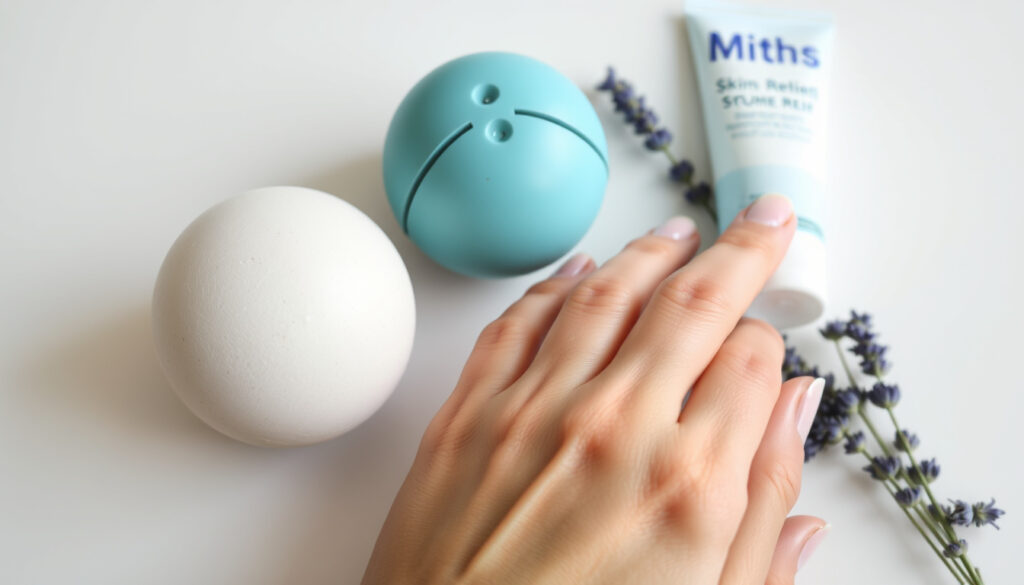
Stress Bumps on Fingers: Causes, Treatments, and Home Remedies
Few things are as frustrating as feeling a small, itchy blister appear on your finger when you’re already stressed. That familiar bump could be dyshidrotic eczema—a skin condition that flares up in response to stress, moisture, or allergens, and knowing how to manage these flare-ups naturally can save you from weeks of discomfort.
Typical flare duration: 2–3 weeks ·
Contagious: No ·
Common triggers: Stress, moisture, allergens ·
Affected areas: Hands and feet
Quick snapshot
- Small, itchy blisters on fingers and palms (Cleveland Clinic)
- Also called dyshidrotic eczema or pompholyx (Cleveland Clinic)
- Flare-ups often linked to stress (Medical News Today)
- Stress (Cleveland Clinic)
- Moisture (sweaty hands) (Medical News Today)
- Allergens like nickel (Medical News Today)
- Seasonal changes (Medical News Today)
- Cold compresses (Cleveland Clinic)
- Topical corticosteroids (MedicineNet)
- Moisturizers (Cleveland Clinic)
- Avoiding triggers (Medical News Today)
- Severe itching or pain (Cleveland Clinic)
- Signs of infection (Cleveland Clinic)
- Frequent recurrences (Cleveland Clinic)
- Blisters on feet also (Cleveland Clinic)
Six key facts, one pattern: dyshidrotic eczema is chronic but manageable—flare-ups are short-lived and non-contagious, yet they recur unpredictably.
| Label | Value |
|---|---|
| Typical flare duration | 2–3 weeks |
| Contagious | No |
| Common triggers | Stress, moisture, allergens |
| Affected areas | Hands and feet |
| Appearance | Small, fluid-filled blisters |
| Recurrence | Common; may come back periodically |
What Is Dyshidrotic Eczema?
- Small, itchy blisters on hands and feet — officially called dyshidrotic eczema (Cleveland Clinic)
- Also known as dyshidrosis or pompholyx
- Not contagious — no risk of spreading to others
- Flare-ups triggered by stress, allergens, moisture
What does dyshidrotic eczema look like?
- Clusters of small, fluid-filled blisters on fingers, palms, and soles
- The skin between the fingers is commonly affected
- Itching can be severe, sometimes described as “extreme” by patients
Is dyshidrotic eczema contagious?
- No — an authoritative source states it “isn’t contagious”
- You can safely touch, share towels, or shake hands without risk
Knowing it’s eczema and not a contagious infection means you can focus on inflammation management rather than isolation. The emotional relief alone can help break the stress–flare cycle.
The pattern: early recognition and stress management are key to reducing flare frequency.
Why Do I Get Stress Bumps on My Fingers?
- Stress is a common trigger
- Allergens and moisture also contribute
- Exact cause unknown but linked to immune response
What triggers dyshidrotic eczema?
- Emotional stress
- Moisture — sweaty hands or prolonged wetness
- Allergens like nickel and cobalt
- Seasonal changes, especially in summer
Why does stress cause blisters on fingers?
- Stress alters the immune system and can trigger inflammation in the skin
- The exact biological pathway is still unclear, but the link is well documented in clinical practice
Bottom line: Stress doesn’t directly cause the blisters, but it lowers your skin’s barrier defenses, making you more vulnerable. Anyone under high pressure should monitor their hands for early signs.
How to Remove Stress Bumps on Fingers?
Home remedies for stress bumps
- Wash with mild soap or emollient cleansers
- Apply a cool compress for 10–15 minutes, 2–4 times a day
- Moisturize immediately after cooling with unscented lotion
- Use lukewarm water — not hot or cold — when washing
- Avoid popping blisters (the skin covering protects against infection)
- Cover affected areas with a bandage or gauze, change at least once a day
Medical treatments for dyshidrotic eczema
- Over-the-counter low-strength topical corticosteroid (e.g., hydrocortisone)
- Topical pramoxine for numbing and itch relief
- Oral antihistamines (e.g., fexofenadine, cetirizine) for severe itching
- Prescription-strength creams or phototherapy for persistent cases
How to prevent recurrence
- Avoid direct contact with detergents, harsh soaps, and skin irritants
- Manage stress through relaxation techniques
- Keep hands dry — dry thoroughly after washing and wear cotton gloves in humid conditions
Popping blisters can introduce bacteria and lead to cellulitis. Leave the blisters intact and let them dry naturally. If you see redness spreading or feel warmth, see a doctor promptly.
The implication: consistent home care and avoidance of triggers can prevent escalation.
What Supplements and Diet Help with Eczema?
- Vitamin D, probiotics, and fish oil may help some patients
- Foods high in nickel (nickel-rich foods) may trigger dyshidrosis in sensitive individuals
- Some traditional Chinese medicine approaches are used, though evidence is limited
Best supplements for eczema relief
- Vitamin D — may reduce severity of eczema symptoms
- Probiotics — gut health influences inflammation
- Fish oil (omega-3) — anti-inflammatory properties
Foods that trigger dyshidrotic eczema
- Nickel-rich foods: chocolate, nuts, oatmeal, legumes, canned food
- Cobalt-rich foods (less common trigger)
- Dietary adjustments may help when nickel allergy is confirmed
Chinese herbal remedies for eczema
- Traditional Chinese medicine uses herbal mixtures applied topically or ingested
- Evidence is mixed — some studies show benefit, but quality varies
Bottom line: Supplements are not a quick fix, but for those with confirmed nickel sensitivity, dietary changes can cut the number of flare-ups. The trade-off: you may need to adjust your diet for weeks before seeing results.
Will Stress Bumps Go Away?
- Flare-ups last 2–3 weeks
- Can recur periodically
- May resolve without treatment
- See doctor if severe or frequent
How long do stress bumps last?
- Typically 2–3 weeks at a time
- With treatment, symptoms may improve sooner
Do stress bumps go away on their own?
- Yes, many mild flare-ups resolve without intervention
- However, they often return if triggers aren’t managed
When to see a doctor
- If blisters become infected (increased redness, pain, pus)
- If flare-ups are frequent or interfere with daily life
- If over-the-counter treatments fail after two weeks
“It isn’t contagious and can flare up from stress, allergens or moisture.” If you’re experiencing pain in your left shoulder that radiates, you can find more information at $Ont i vänster axel strålar.
Cleveland Clinic (a leading academic medical center)
“The symptoms usually last 2 to 3 weeks at a time.”
Medical News Today (health news publisher)
“Extremely itchy bumps and watery blisters to form on the hands and feet.”
Medical News Today (health news publisher)
The catch: while most flare-ups resolve, recurrence is common without trigger management.
Confirmed facts
- Stress is a trigger
- Not contagious
- Topical steroids reduce symptoms
- Blisters last 2–3 weeks
What’s unclear
- Exact cause of dyshidrotic eczema
- Why some people get it and others don’t
- Long-term effectiveness of dietary changes
For anyone dealing with recurring stress bumps, the evidence-backed path is clear: identify your personal triggers, adopt a barrier-friendly home routine, and use over-the-counter treatments as first-line defense—or risk frequent, uncomfortable flare-ups that disrupt your daily life.
grahamsnatural.com, harlanmd.com, nationaleczema.org, goodrx.com
For those looking to address the underlying cause, exploring stress reduction techniques can help manage flare-ups of stress bumps on fingers.
Frequently asked questions
Can stress bumps appear on feet?
Yes, dyshidrotic eczema commonly affects the feet as well as hands.
Are stress bumps a form of eczema?
Yes, they are a type of eczema called dyshidrotic eczema.
Is dyshidrotic eczema the same as pompholyx?
Yes, pompholyx is another name for dyshidrotic eczema.
Can children get stress bumps?
Yes, children can develop dyshidrotic eczema, though it is more common in adults.
Does stress cause permanent damage to the skin?
No, the blisters heal without scarring unless they become infected.
What is the difference between stress bumps and poison ivy?
Poison ivy rash is caused by urushiol oil and is linear/streaky, while dyshidrotic eczema appears as clustered blisters on hands/feet and is not triggered by plant contact.
Can stress bumps be prevented?
Prevention focuses on managing stress, avoiding triggers, keeping hands dry, and avoiding known allergens.
More related posts
 Brooklyn Nine-Nine – Cast, Seasons, Ending and Where to Watch
 Kill Tooth Pain Nerve in 3 Seconds Permanently? No – What Works
 Lilo & Stitch Live Action: Release, Cast, Autism & LGBTQ Themes
 See You Again Lyrics: Meaning and Story of Both Songs
 What Is Trump’s Life Expectancy? Age, Health, Outlook
 Numbers 6:24-26 Meaning: Aaronic Blessing Explained
 Where to Eat Near Me: Dublin, Cork & Traditional Irish Food
 Is the Shutdown Over? 2025 US Government Status Update
