Do Bananas Have Fiber? A Complete Guide
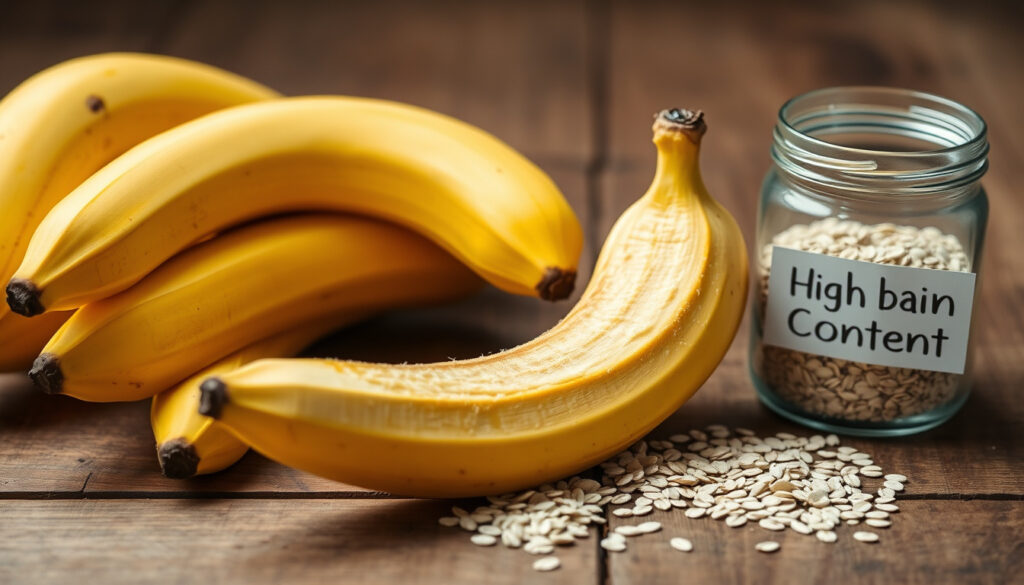
Do bananas have fiber? Yes — and the amount shifts with every stage of ripeness. A medium ripe banana delivers about 3 grams of fiber, while the type of fiber changes from resistant starch in green fruit to soluble pectin in spotted bananas.
Key stats: 3 g fiber per medium ripe banana · >3 g per green banana · <2 g per overripe banana · 25–38 g daily recommendation for adults · Bananas rank in the middle tier among fruits · Both soluble and insoluble fiber present
Fiber Content by Ripeness
- Green banana: >3 g fiber Harvard T.H. Chan School of Public Health
- Ripe banana: 3 g fiber Harvard T.H. Chan School of Public Health
- Overripe: <2 g fiber Healthline
Bananas vs Other Fruits
- Apple: 4.4 g fiber Harvard T.H. Chan School of Public Health
- Pear: 5.5 g fiber Healthline
- Raspberries: 8 g per cup Harvard T.H. Chan School of Public Health
Bananas and Digestion
- Soluble fiber feeds gut bacteria Harvard T.H. Chan School of Public Health
- Insoluble fiber adds bulk Healthline
- May help constipation or diarrhea depending on ripeness Harvard T.H. Chan School of Public Health
Daily Intake Tips
- 1-2 bananas per day is safe for most Harvard T.H. Chan School of Public Health
- Pair with water and other fiber foods Healthline
- Avoid unripe bananas if prone to bloating Healthline
| Metric | Value | Source |
|---|---|---|
| Fiber in medium ripe banana | 3 g | Harvard T.H. Chan School of Public Health |
| Fiber in medium green banana | >3 g | Healthline |
| Fiber in overripe banana | <2 g | Healthline |
| Daily fiber recommendation (women) | 25 g | National Institutes of Health |
| Daily fiber recommendation (men) | 38 g | National Institutes of Health |
| Rank among common fruits | Moderate – lower than apple, pear, raspberry | Harvard T.H. Chan School of Public Health |
Are bananas a good source of fiber?
Bananas contain a moderate amount of fiber compared with other fruits. A medium ripe banana provides about 3 grams of fiber, according to Harvard T.H. Chan School of Public Health. That same banana also supplies 110 calories, 15 grams of naturally occurring sugar, and no fat. Bananas are also a source of potassium, magnesium, vitamin B6, vitamin C, and manganese.
The fiber in bananas comes in two forms: soluble and insoluble. Soluble fiber dissolves in water and helps feed beneficial gut bacteria. Insoluble fiber adds bulk to stool and supports regular bowel movements.
How much fiber is in one banana?
A medium banana (about 118 grams) contains roughly 3 grams of fiber when fully ripe. A large banana (136 grams) may provide closer to 3.5 grams. The exact number depends on size and ripeness.
Green bananas score higher. Healthline reports that green bananas provide about 3 grams of fiber per serving, but because resistant starch behaves like fiber in the body, the effective fiber load is higher. A 2021 NIH study (Phillips et al.) found that unripe bananas average about 18 grams of fiber per 100 grams by modified assay, dropping to 4–5 grams per 100 grams in ripe fruit.
Does ripeness change the fiber content?
Yes — and the shift is significant. As bananas ripen, starches convert to sugars. This changes both the quantity and type of fiber.
- Green (unripe): High in resistant starch, which functions like dietary fiber. Total effective fiber may exceed 3 grams per medium fruit.
- Yellow (ripe): About 3 grams of fiber. Resistant starch is largely gone, replaced by pectin and simple sugars.
- Spotted or overripe: Fiber drops below 2 grams. Most of the starch has converted to sugar, and pectin begins to break down.
Harvard T.H. Chan School of Public Health notes that resistant starch in less-ripe green bananas may support gut healing because it resists digestion in the small intestine and feeds colonic bacteria.
“Bananas contain both insoluble and soluble fiber to keep bowel movements regular.” — Cleveland Clinic dietitian, cited in health.clevelandclinic.org
Which has more fiber: banana or apple?
Apples beat bananas on fiber per serving — but the gap is not huge.
Fiber content in an average apple
A medium apple with skin contains about 4.4 grams of fiber, according to Harvard T.H. Chan School of Public Health. That is roughly 1.5 grams more than a medium banana. The skin contributes a significant portion of the apple’s insoluble fiber.
The implication: If fiber is your main goal, an apple is a slightly better choice per piece. But bananas offer other advantages, including potassium and resistant starch in the green stage.
Fiber comparison table: banana vs apple vs pear vs raspberry
The table below compares fiber content across four common fruits.
| Fruit | Serving size | Fiber (grams) |
|---|---|---|
| Raspberries | 1 cup | 8.0 |
| Pear (with skin) | 1 medium | 5.5 |
| Apple (with skin) | 1 medium | 4.4 |
| Banana (ripe) | 1 medium | 3.0 |
What this means: Bananas sit near the lower end among high-fiber fruits. They are a solid moderate source, not a top contender.
Are bananas good for your bowels?
Bananas can support bowel health, but the effect depends heavily on ripeness and individual tolerance.
How bananas affect constipation
The insoluble fiber in bananas adds bulk to stool, which can help move waste through the digestive tract. Harvard T.H. Chan School of Public Health notes that bananas contain both soluble and insoluble fiber, making them a dual-action food for regularity.
Green bananas bring resistant starch into the mix. Resistant starch draws water into the colon and may soften stool. However, in sensitive individuals, the same resistant starch can cause bloating or gas.
How bananas affect diarrhea
Ripe bananas may help firm loose stools. The pectin in ripe bananas acts as a soluble fiber that absorbs excess water in the gut. Harvard T.H. Chan School of Public Health also notes that bananas help replete electrolytes like potassium lost during diarrhea or vomiting.
Does ripeness change bowel effects?
Yes — and this is where many popular-health claims get imprecise.
- Green bananas: High resistant starch may relieve constipation in some people but cause bloating in others.
- Ripe bananas: Pectin and moderate fiber support regularity without the gas trigger for most people.
- Overripe bananas: Lower fiber, higher sugar, and less benefit for constipation.
The pattern: Choose green if you tolerate resistant starch and want maximum fiber. Choose ripe if you are sensitive to gas or need stool-firming pectin.
“One medium banana provides about 3 grams of fiber, 0 g fat, 1 g protein.” — Harvard T.H. Chan School of Public Health
What fruit is the highest in fiber?
Bananas are not the highest — but they are far from the lowest.
Top high-fiber fruits ranked
According to Harvard T.H. Chan School of Public Health and NIH nutrition databases, the fruits with the most fiber per standard serving are:
- Raspberries: 8.0 g per cup
- Pear: 5.5 g per medium fruit
- Apple: 4.4 g per medium fruit
- Banana: 3.0 g per medium fruit
- Orange: 3.1 g per medium fruit
- Strawberries: 3.0 g per cup
The catch: Dried fruits such as prunes (3.5 g per 5 prunes) and figs (3.7 g per 2 figs) also deliver dense fiber but come with more sugar per gram.
How banana compares to other fruits
Bananas sit in the middle of the fruit fiber pack. They provide more fiber than watermelon, grapes, or cantaloupe but less than berries and pears. The advantage of bananas is that they are available year-round, inexpensive, and easy to digest at any ripeness level.
Can bananas stop constipation?
Bananas can help relieve mild constipation, but they are not a guaranteed fix for everyone.
How fiber in bananas helps bowel movements
The fiber in bananas — especially from ripe fruit — adds bulk to stool. Bulk stimulates peristalsis, the wave-like muscle contractions that move waste through the colon. Healthline notes that resistant starch and pectin in green bananas may improve digestive health by feeding beneficial gut bacteria.
When bananas might worsen constipation
Very unripe bananas with high resistant starch can backfire in sensitive individuals. The resistant starch ferments in the colon, producing gas that can cause bloating and discomfort. For people with slow gut motility, that gas can paradoxically slow things down.
Harvard T.H. Chan School of Public Health notes that less-ripe green bananas may support gut healing, but the effect on constipation is individual. The same resistant starch that helps one person may cause another to feel worse.
Best time to eat banana for constipation
If constipation is the issue, a fully ripe banana (yellow with a few brown spots) is the safest bet. The pectin and soluble fiber soften stool without the gas risk of resistant starch. Pair the banana with a glass of water — fiber needs fluid to work.
For those who tolerate green bananas, eating them earlier in the day allows time for fermentation and hydration to do their work.
“Mean fiber in unripe bananas ~18 g/100g, decreasing to 4-5 g/100g in ripe fruit.” — NIH study (Phillips et al., 2021)
Is 2 bananas a day too much fiber?
For most adults, two bananas a day is not too much fiber — it is a reasonable contribution to daily needs.
Daily fiber needs and banana contribution
The National Institutes of Health recommends 25 grams of fiber per day for women and 38 grams for men. Two medium ripe bananas provide about 6 grams of fiber, which covers 16–24 percent of that target.
That leaves room for other fiber sources — vegetables, legumes, whole grains, and other fruits — to fill the rest of the day’s requirement.
Can you eat too many bananas?
Excessive fiber from all sources — above 70 grams per day — can cause bloating, gas, diarrhea, or nutrient malabsorption. Two bananas contribute 6 grams, well below that threshold.
The bigger concern with bananas is sugar. Two medium bananas deliver about 30 grams of naturally occurring sugar. For most people that is fine, but those managing diabetes or insulin resistance should account for the carbohydrate load. Harvard T.H. Chan School of Public Health reports that ripe bananas have a glycemic index of 51 (low) and a glycemic load of 13, while slightly under-ripe bananas score 42 and 11 respectively.
Do bananas cause gas or bloating?
Bananas can cause gas in some people — but not everyone.
Why bananas can cause gas
Bananas contain fructans, a type of fermentable carbohydrate in the FODMAP family. For people with irritable bowel syndrome or FODMAP sensitivity, fructans can cause gas, bloating, and abdominal discomfort.
Unripe bananas may be better tolerated by some because their starch resists rapid fermentation compared to the sugars in ripe fruit. However, the resistant starch itself can produce gas during colonic fermentation.
Fructans and FODMAPs in bananas
A medium ripe banana contains moderate levels of fructans. The Monash University FODMAP app lists ripe bananas as low FODMAP in servings up to one-third of a medium banana and moderate FODMAP above that. Green bananas are lower in fructans and may be better tolerated.
Cooking bananas — such as boiling or baking — can break down some of the gas-causing compounds. Not everyone reacts the same way, so individual testing is the best guide.
Upsides of bananas for digestion
- Provide both soluble and insoluble fiber
- Resistant starch in green bananas feeds gut bacteria
- Pectin in ripe bananas may help firm loose stools
- Convenient, portable, and widely available
- Good source of potassium and electrolytes
Downsides to watch
- Fructans can cause gas and bloating in sensitive people
- Unripe bananas may worsen constipation in some individuals
- Fiber content drops significantly in overripe fruit
- Sugar content rises from 12 g (green) to 15 g (ripe)
- Not the highest-fiber fruit option available
Related reading: Can Dogs Eat Coconut? · How Much Weight Can You Lose in a Month?
For those looking to increase their overall intake, a high-fiber foods chart for constipation can help track which fruits offer the most digestive benefit.
Frequently asked questions about bananas and fiber
Can bananas help with diarrhea?
Yes — ripe bananas contain pectin, a soluble fiber that absorbs excess water in the gut and can help firm loose stools. Harvard T.H. Chan School of Public Health also notes that bananas replete potassium and other electrolytes lost during diarrhea.
How much fiber is in a large banana?
A large banana (about 136 grams) provides roughly 3.5 grams of fiber when ripe. The exact amount depends on ripeness — greener fruit delivers more effective fiber due to resistant starch.
Do bananas have more sugar than fiber?
Yes. A medium ripe banana contains about 15 grams of sugar and 3 grams of fiber. The sugar-to-fiber ratio is roughly 5:1. That is typical for sweet fruits. For comparison, an apple has a ratio near 4:1.
Are bananas a prebiotic food?
Yes — especially green bananas. The resistant starch in unripe bananas acts as a prebiotic, feeding beneficial bacteria in the colon. Harvard T.H. Chan School of Public Health notes that resistant starch functions similarly to dietary fiber and supports gut health.
Can eating too many bananas cause constipation?
For most people, no — 1–2 bananas per day supports regularity. However, eating large quantities of very unripe bananas may cause bloating or sluggishness in individuals sensitive to resistant starch. The effect is individual, not universal.
What is the best fruit for fiber intake?
Raspberries lead among common fruits with 8 grams per cup, followed by pears (5.5 g) and apples (4.4 g). Bananas (3 g) are a solid moderate option but not the highest. Dried fruits like prunes and figs also provide dense fiber.
Do bananas have fiber without the peel?
Yes — all the fiber is in the flesh. The peel contains some fiber too but is not typically eaten. A peeled ripe banana provides about 3 grams of fiber per medium fruit.
Bananas provide a moderate, ripeness-dependent source of fiber. For most people, one or two bananas per day support regularity without overloading the gut. The catch: Green fruit delivers more resistant starch and fiber, while ripe fruit offers pectin and easier tolerance. Choosing the right stage of ripeness for your digestive system makes the difference between relief and discomfort.
More related posts
 Who Won the Kentucky Derby 2025? Winner, Payouts & Results
 66 Inches in Feet: Conversion, Height Comparisons, and Context
 HP Instant Ink Login – Step-by-Step Guide and Fixes
 Ninja Air Fryer Oven Review: Is It Right for You
 Jemaine Clement Movies and TV Shows: Full Career Guide
 DISM /Online /Cleanup-Image /RestoreHealth: Repair Windows
 All Dogs Go to Heaven True Story: The Tragedy Behind the Film
 Kitchen Table and Chairs: Best Sets Available in Ireland
