Zone of Proximal Development: Definition, Vygotsky & Examples
Anyone who has watched a student wrestle with a problem just beyond their grasp—and then light up when a teacher offers a small hint—has seen the zone of proximal development in action. This core idea from psychologist Lev Vygotsky explains why learning often happens best with a little help from someone who knows more. By the end of this article, you will understand what ZPD really means, how scaffolding works in classrooms, and why these concepts still guide teaching today.
Year introduced: 1978 by Lev Vygotsky in Mind in Society ·
Core concept: Difference between actual developmental level and potential development with support ·
Related term: Scaffolding (Wood, Bruner, Ross, 1976) ·
Field: Educational psychology and social constructivism
Quick snapshot
- Range of tasks achievable with assistance (Simply Psychology)
- Developed by Lev Vygotsky (New York State Education Department)
- Core of sociocultural theory (Grand Canyon University)
- Actual development level (Simply Psychology)
- Potential development level (Simply Psychology)
- More knowledgeable other (MKO) (ScienceDirect)
- Scaffolding (New York State Education Department)
- Group work and peer tutoring (Grand Canyon University)
- Graduated guidance from teacher (NSW Department of Education)
- Differentiated instruction (Grand Canyon University)
- Vygotsky emphasizes social interaction (Simply Psychology)
- Piaget emphasizes individual exploration (Simply Psychology)
- Vygotsky: learning leads development; Piaget: development precedes learning (Simply Psychology)
| Fact | Detail |
|---|---|
| Concept origin | Introduced in Vygotsky’s Mind in Society (1978) (Simply Psychology) |
| Key term | Scaffolding – coined by Wood, Bruner, and Ross (1976) (Grand Canyon University) |
| Educational impact | Widely used in constructivist and collaborative teaching models (New York State Education Department) |
| Related field | Educational psychology, developmental psychology |
What is meant by the term zone of proximal development?
Definition of ZPD
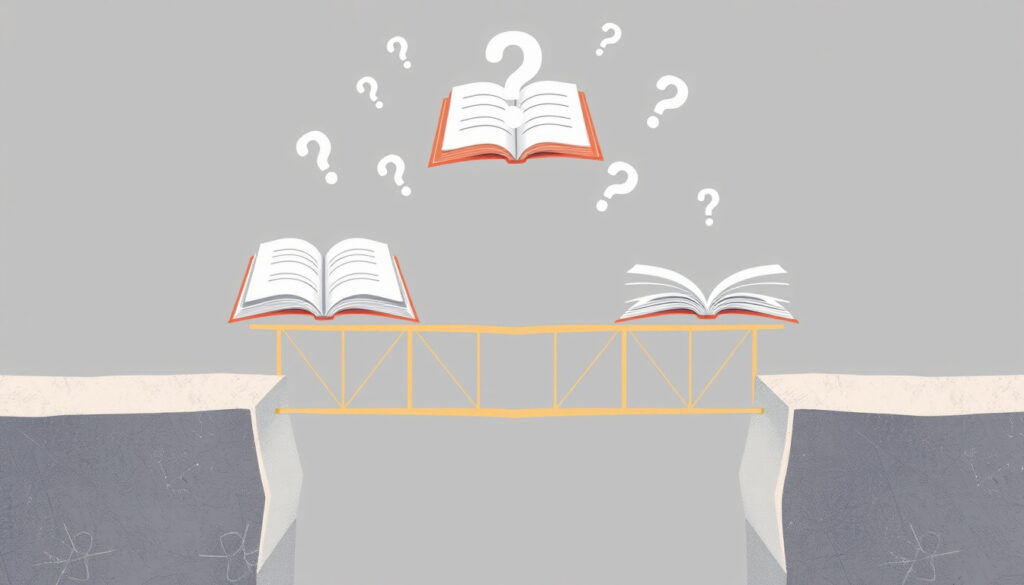
The zone of proximal development is the gap between what a learner can do without help and what they can achieve with guidance. Vygotsky defined it as the distance between the actual developmental level as determined by independent problem solving and the level of potential development as determined through problem solving under adult guidance or in collaboration with more capable peers
(Simply Psychology).
Actual vs potential development
- Actual developmental level: tasks the learner can perform independently.
- Potential developmental level: tasks the learner can accomplish with support from a more knowledgeable other.
- ZPD is the zone between these two levels (New York State Education Department).
Key figure: Lev Vygotsky
Lev Vygotsky, a Russian psychologist active in the 1920s and 1930s, introduced the concept in his work on social development theory. His ideas were not widely known in the West until the publication of Mind in Society in 1978 (Simply Psychology). Vygotsky argued that social interaction is the foundation of cognitive development, a viewpoint that distinguishes his theory from Piaget’s individualistic model.
The implication: a teacher who identifies each learner’s ZPD can target instruction exactly where growth happens. Without that recognition, tasks may be either too easy to stretch thinking or too hard to engage.
How to explain the zone of proximal development?
Using the ‘sweet spot’ analogy
The ZPD is often described as the sweet spot between tasks that are too easy and those that are too difficult. When a student works on problems just beyond their current ability with the right support, learning accelerates (Educational Technology and Mobile Learning).
Classroom examples
- A teacher models a math problem step by step, then guides the class through a similar problem, and finally releases students to solve independently (Grand Canyon University).
- In guided reading, a teacher selects a text slightly above the student’s independent level and provides prompts and questions.
- Peer tutoring: a student who has mastered a concept helps a classmate who is still developing understanding (ScienceDirect).
Role of the more knowledgeable other (MKO)
The MKO can be a teacher, a peer, or even a digital tool that offers guidance. The key is that the MKO provides support within the learner’s ZPD and gradually withdraws it as the learner gains competence (New York State Education Department).
Teachers who diagnose the ZPD accurately can turn frustration into growth. A student who is stuck on a word problem may only need a prompt about the first step—not a full solution—to stay in the learning zone.
Why this matters: without an MKO, a learner may either flounder in tasks beyond reach or coast on tasks already mastered. The ZPD gives educators a framework to calibrate challenge and support.
What is the difference between ZPD and scaffolding?
Definition of scaffolding
Scaffolding is a teaching method that provides temporary support to help students accomplish tasks within their ZPD. The term was coined by Wood, Bruner, and Ross in 1976 to describe how a tutor assists a child in solving a problem beyond the child’s current ability (Grand Canyon University).
ZPD as the space, scaffolding as the support
ZPD is the conceptual space where learning is possible; scaffolding is the set of instructional strategies used to help the learner navigate that space. As the New York State Education Department explains, scaffolding includes both structural supports (e.g., checklists, graphic organizers) and procedural supports (e.g., modeling, questioning). The Education Endowment Foundation warns that scaffolding is more than a worksheet—effective scaffolding is responsive and gradually faded.
Comparison table
Three distinctions, one pattern: ZPD defines where learning can occur; scaffolding describes how to support that learning.
| Aspect | ZPD | Scaffolding |
|---|---|---|
| Type of concept | Learner development zone | Instructional strategy |
| Origin | Vygotsky (1978) | Wood, Bruner, Ross (1976), building on Vygotsky |
| Primary question | What can the learner achieve with help? | How can the teacher provide that help effectively? |
| Dynamic | Static potential at a given time | Must be adjusted and faded as learner improves |
| Related research | A 2017 review in ScienceDirect argues they are related but not identical | A 2023 meta-analysis in PubMed Central examined scaffolding effects on regulation strategies |
The trade-off: conflating ZPD and scaffolding can lead teachers to use generic supports without diagnosing the learner’s actual zone. A scaffold that is not matched to the ZPD is just busywork.
What is the concept zone of proximal development related to?
Vygotsky’s social development theory
ZPD is a cornerstone of Vygotsky’s broader social development theory, which holds that every function in a child’s development appears twice: first on the social level (between people) and then on the individual level (inside the child) (Simply Psychology).
Scaffolding
As discussed, scaffolding is the practical application of ZPD. The NSW Department of Education links scaffolding to a we do, you do
technique that builds confidence and retention over time.
More knowledgeable other (MKO)
The MKO is the person (or tool) providing guidance within the ZPD. Effective MKOs diagnose what the learner needs and adjust support accordingly (ScienceDirect).
Sociocultural learning
ZPD places learning in a social context rather than inside the individual mind. This sociocultural perspective influences modern approaches such as cooperative learning and dialogic teaching (Taylor & Francis Online).
The pattern: these concepts are not separate boxes—they form a single ecosystem where social interaction, guided support, and gradually released responsibility work together to move learners forward.
What are the 4 principles of Vygotsky’s theory?
Principle 1: Social interaction precedes development
Vygotsky argued that cognitive development originates from social interaction. A child first learns through collaborative dialogue and then internalizes that knowledge (Simply Psychology).
Principle 2: The more knowledgeable other (MKO)
Learning is mediated by someone or something with greater knowledge. The MKO can be a teacher, an adult, a more advanced peer, or even a digital tutor (ScienceDirect).
Principle 3: The zone of proximal development (ZPD)
This is the key area where learning happens—the gap between independent capability and assisted capability. Instruction should target this zone (New York State Education Department).
Principle 4: Language as a cultural tool
Language and other signs (symbols, writing) mediate higher mental functions. Through language, children internalize cultural knowledge and regulate their own thinking (Simply Psychology).
What this means: Vygotsky’s principles form a roadmap for teaching. Start with social interaction, leverage an MKO, target the ZPD, and use language as a bridge—each step builds on the last.
Not every classroom interaction is effective scaffolding. The 2023 review in ScienceDirect found that many studies still struggle to define when scaffolding is truly contingent—meaning adapted moment to moment to the learner’s needs.
What is confirmed and what remains unclear
Confirmed facts
- ZPD is the gap between independent performance and assisted performance (Simply Psychology)
- Vygotsky emphasized social interaction as key to learning (Simply Psychology)
- Scaffolding is a practical application of ZPD (New York State Education Department)
- A 2023 meta-analysis found regulated learning scaffolding improves academic performance (PubMed Central)
What’s unclear
- Exact mechanisms of how scaffolding should be faded (ScienceDirect)
- Measurement of ZPD in classroom settings (Taylor & Francis Online)
- Whether ZPD applies equally to all domains of learning
Perspectives from the field
The zone of proximal development is the distance between the actual developmental level as determined by independent problem solving and the level of potential development as determined through problem solving under adult guidance or in collaboration with more capable peers.
— Lev Vygotsky, Mind in Society (1978) (Simply Psychology)
Scaffolding consists of the adult controlling those elements of the task that are initially beyond the learner’s capacity, thus permitting them to concentrate upon and complete only those elements that are within their range of competence.
— Wood, Bruner, and Ross (1976) (Grand Canyon University)
Effective scaffolding is contingent: the teacher must continuously diagnose the learner’s understanding and adjust support accordingly. This remains one of the most challenging aspects of classroom practice.
— 2023 review in ScienceDirect
Summary
The zone of proximal development is not a theoretical curiosity—it is a practical framework that helps teachers decide where to aim their instruction. For K-12 educators, the implication is clear: design lessons that place tasks in the learner’s ZPD, provide scaffolding that is specific and temporary, and hand over responsibility as soon as the learner is ready. The alternative—teaching without regard for the learner’s current zone—risks either boredom or frustration. For the student who is stuck on a math problem, the right prompt at the right moment can turn confusion into mastery.
For a practical classroom breakdown of Vygotskys ZPD theory, this resource offers concrete examples of scaffolding in action.
Frequently asked questions
Who developed the zone of proximal development?
Psychologist Lev Vygotsky introduced the concept in the 1930s, though his work became widely known in English after the 1978 publication of Mind in Society (Simply Psychology).
What is scaffolding in education?
Scaffolding is temporary support provided by a teacher to help students learn new concepts or skills. It can include modeling, prompts, hints, and structured materials that are gradually removed (Grand Canyon University).
How does ZPD apply to adult learning?
Adults also learn within a ZPD, especially when tackling new professional skills or complex subjects. A mentor, coach, or online tutorial can serve as the MKO (Taylor & Francis Online).
Can ZPD be measured?
Measuring ZPD is challenging. Common approaches include dynamic assessment, where the teacher observes how much support a learner needs to complete a task. There is no standardized metric (Simply Psychology).
What are criticisms of the zone of proximal development?
Critics argue the concept is vague and hard to operationalize. Some researchers have called for clearer definitions of how ZPD differs from similar ideas like readiness or potential (ScienceDirect).
How does ZPD differ from Piaget’s stages of development?
Piaget saw development as unfolding in fixed stages that precede learning. Vygotsky believed learning could drive development—so instruction aimed at the ZPD actually creates new developmental capacity (Simply Psychology).
What is a more knowledgeable other (MKO)?
An MKO is anyone or anything with greater knowledge or skill than the learner. This can be a teacher, a peer, a parent, or even a digital tool (ScienceDirect).
Does ZPD work for all subjects?
ZPD is most commonly applied in academic subjects like math and reading, but the principle of guided support applies to any skill—from learning a sport to mastering a new language (New York State Education Department).
More related posts
 SCDCA Warns Data Breach: 236,000+ South Carolina Residents Hit
 Oklahoma City Thunder vs Indiana Pacers Stats: NBA Finals
 You Reap What You Sow: Meaning, Bible Verses & More
 Terminal List Dark Wolf Guide: Prequel, Viewing Order, Season 2
 Palm Springs Surf Club: Opening, Prices, Events & Reviews
 Rick and Morty Season 8 – Release Date, Episodes, Cast
 Parking Garage Near Me: Dublin & Cork Price Guide
 CPSC Gourmia Pressure Cooker Recall – Serious Burn Hazard
